
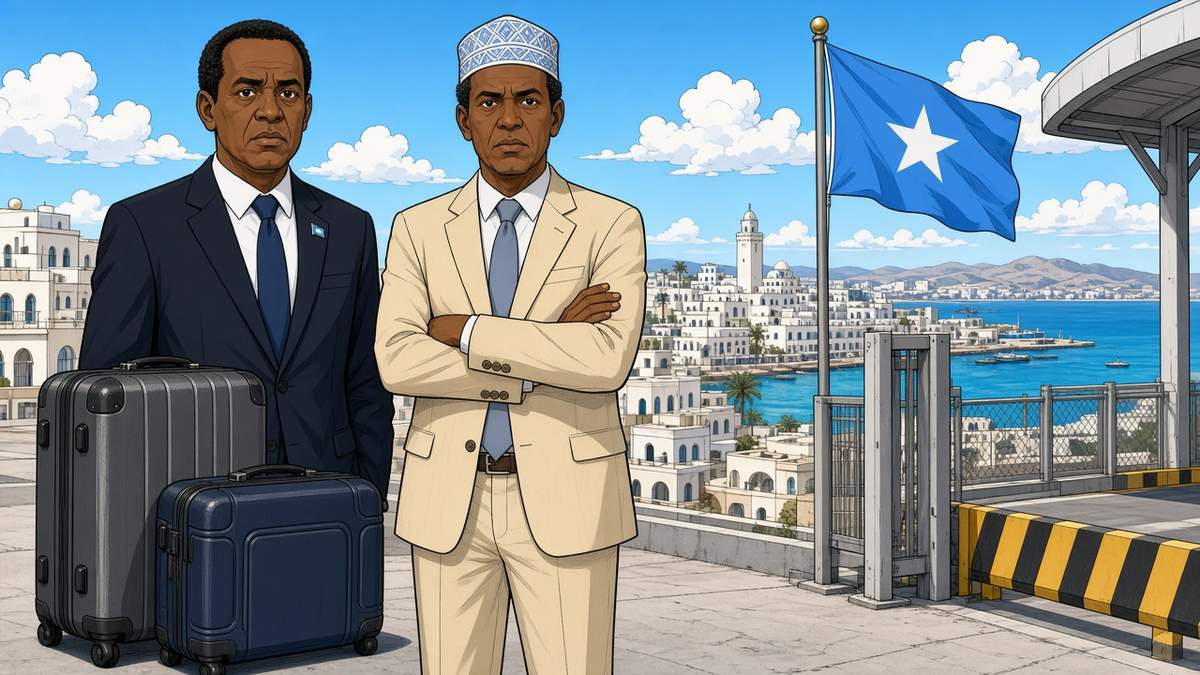
Somalia has turned a simmering quarrel with the United Arab Emirates into an open diplomatic rupture. On Thursday the government in Mogadishu told the Emirati ambassador he had three days to get out, and it summoned its own envoy home from Abu Dhabi.
Officials did not soften their language. Information Minister Abdifatah Kasim Mohamud, speaking on state media, described Emirati conduct as an “open invasion” of Somali sovereignty and warned that anyone helping Abu Dhabi would face measures. Defence Minister Ahmed Moalim Fiqi went further on X, telling the diplomat: “Pack your bags and leave.”
At the heart of the row is a basic question of authority. President Hassan Sheikh Mohamud says the Gulf state cut port deals for Berbera, Bosaso and Kismayo with the regional administrations of Somaliland, Puntland and Jubaland instead of with the federal government. Those harbours give the regions their own income and, with it, room to defy the capital. Mogadishu also accuses the Emiratis of setting up bases and armed units that answer to no national commander, at a time when the army is still battling al-Shabab militants.
Abu Dhabi dismisses every one of these claims. Its foreign ministry called the expulsion a hostile step and said Somalia was dragging its internal power struggles into foreign relations. It also pointed out that its embassy in Mogadishu had already been shut, with staff withdrawn, back in January.
The expulsion caps a year of steady decline. Earlier in 2026 Somalia cancelled every agreement it had with the Emirates, from port investments to security cooperation, and banned Emirati military and cargo flights from its airspace. That is a sharp reversal for two countries that were once close partners: Abu Dhabi spent years training Somali troops and still covers costs for thousands of soldiers around the capital, according to Somali sources. President Mohamud insists relations can resume, but only on a footing of equality and mutual respect.
