Few NATO states sit as close to the Kremlin’s anger right now as tiny Estonia. On Monday, Marek Ühtegi, the Estonian diplomat in charge in Moscow, was called in by Russia’s Foreign Ministry, which then declared that Tallinn’s recent moves were pushing the two neighbours toward “open war”.
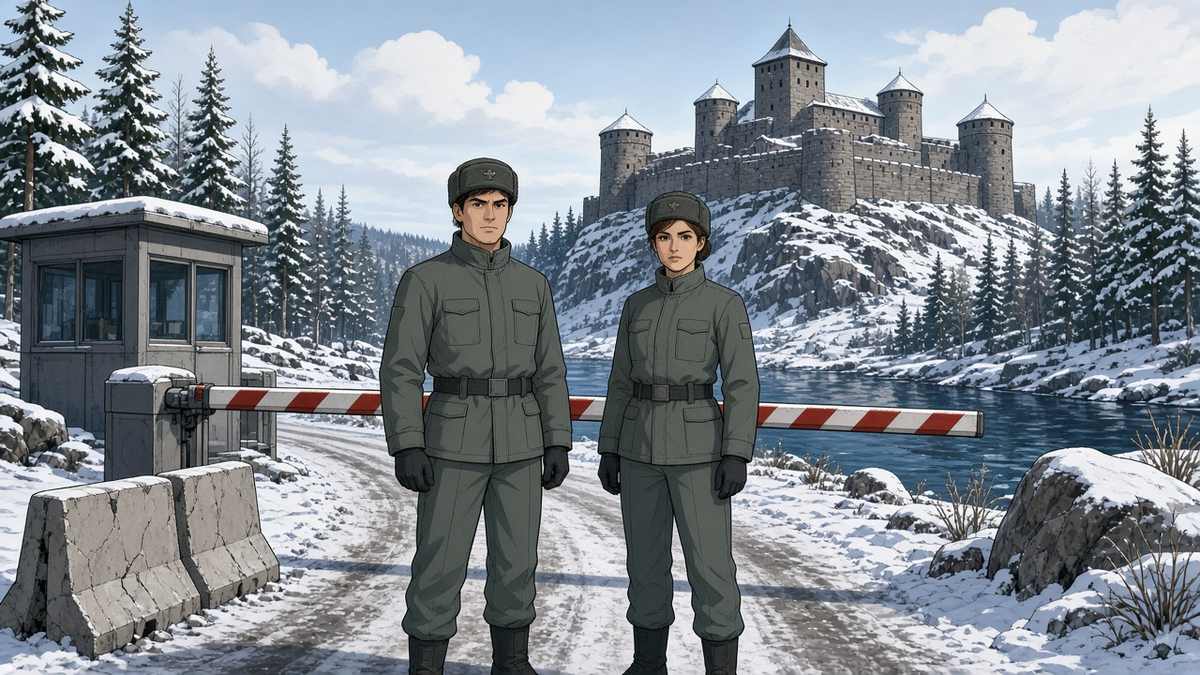
What set off the latest clash is a decision in Tallinn: starting 1 December, and for no less than half a year, cars and trucks will no longer be able to cross the shared land frontier, which stretches about 294 kilometres. Narva-1 and Narva-2 in the north-east will close, as will Koidula, Luhamaa and Saatse further south. Tallinn says the step answers a foiled arson attempt on a defence company near the capital, which Estonian investigators link to Russian military intelligence. Moscow rejects any involvement.
Moscow’s list of grievances did not stop at the checkpoints. It accused Estonia of quietly letting Ukrainian drones cross its airspace to hit north-western Russia, of hampering Russian cargo shipping in the Baltic and of mistreating Russian speakers. Shutting the checkpoints, it warned, would hurt Estonia’s own economy and come back to bite its EU and NATO allies.
Tallinn pushed back within hours. Margus Tsahkna, who heads Estonian diplomacy, called the claims baseless spin designed to pull attention away from the danger Russia itself poses to Europe, and repeated that no Ukrainian drone operations are launched from or through Estonian soil or skies.
Not everyone in Tallinn’s own camp is on board. Head of state Ülle Madise spoke out against it, as did the city leader of Narva, a mostly Russian-speaking town that faces Russia across a river.
In Berlin, Mark Rutte, the alliance’s top civilian, told reporters NATO was keeping a close eye on the Baltic standoff as well as on the Russian missiles that strayed into Polish airspace last week, adding that responses were on the table.