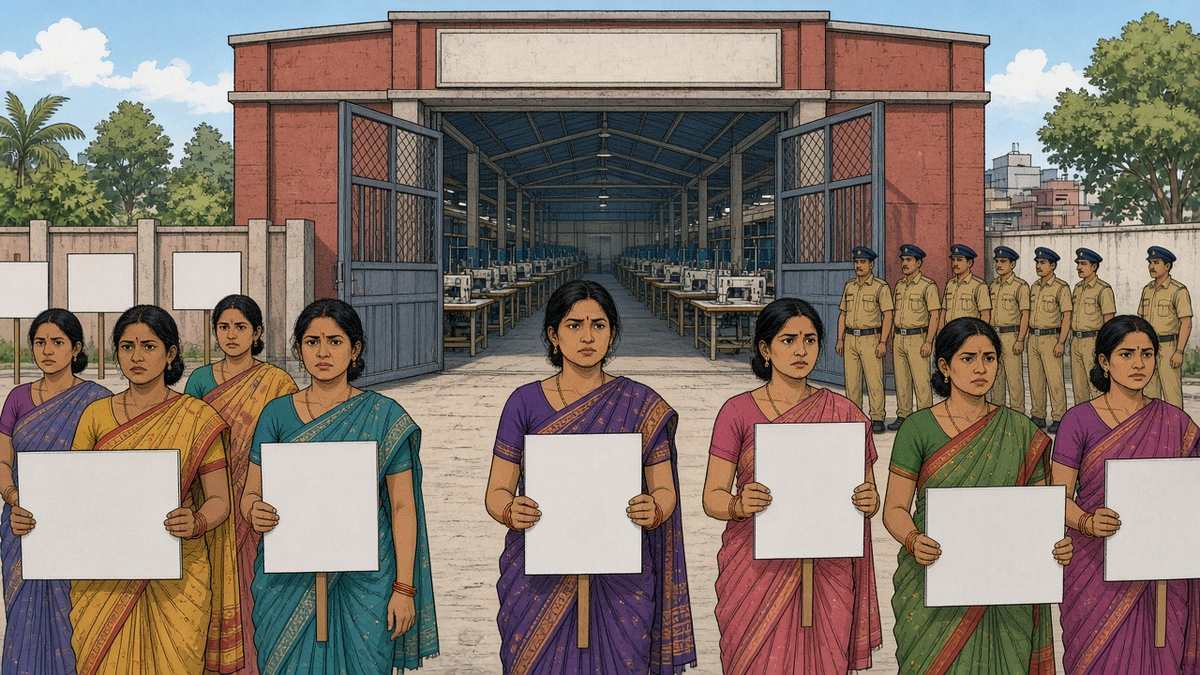
Sewing lines fell silent again on Tuesday across the garment hubs on the edge of Dhaka. Industrial police said 50 factories stayed closed in Savar and Ashulia, split 26 to 24 between the two districts, while staff at seven more plants stopped work. In the afternoon several thousand employees of one large manufacturer occupied a side road at Bagbari in Savar and only cleared it after a long standoff with officers.
The day before had been rougher. On Monday, an attempt to seal off a main road in Ashulia ended with officers firing tear gas shells and stun grenades into the crowd. Three female workers needed hospital care for injuries to the head and legs; doctors later said none was in danger. A union official said men in plain clothes had joined officers in beating protesters with sticks. On Monday, 55 factories either declared a holiday or suspended production.
Money sits at the heart of the dispute. The legal minimum for garment workers is 12,500 taka a month, roughly 100 US dollars, and protesters want 30,000, arguing that inflation has eaten their pay. A wage board set up on November 1 is meant to settle the figure. Worker representatives opened with a demand of 32,000 taka and have reportedly lowered it to 25,000, while factory owners tabled 15,700 on Tuesday, leaving a wide gap.
The stakes reach far beyond the industrial belt. Bangladesh ranks second only to China among clothing exporters. The sector employs more than four million people, most of them women, supplies brands such as H&M, Gap and Walmart, and brings in over 80 percent of the country’s export income.
Police blame outside agitators for keeping the unrest alive. Union leaders reject that, saying workers simply want a number, not another meeting.