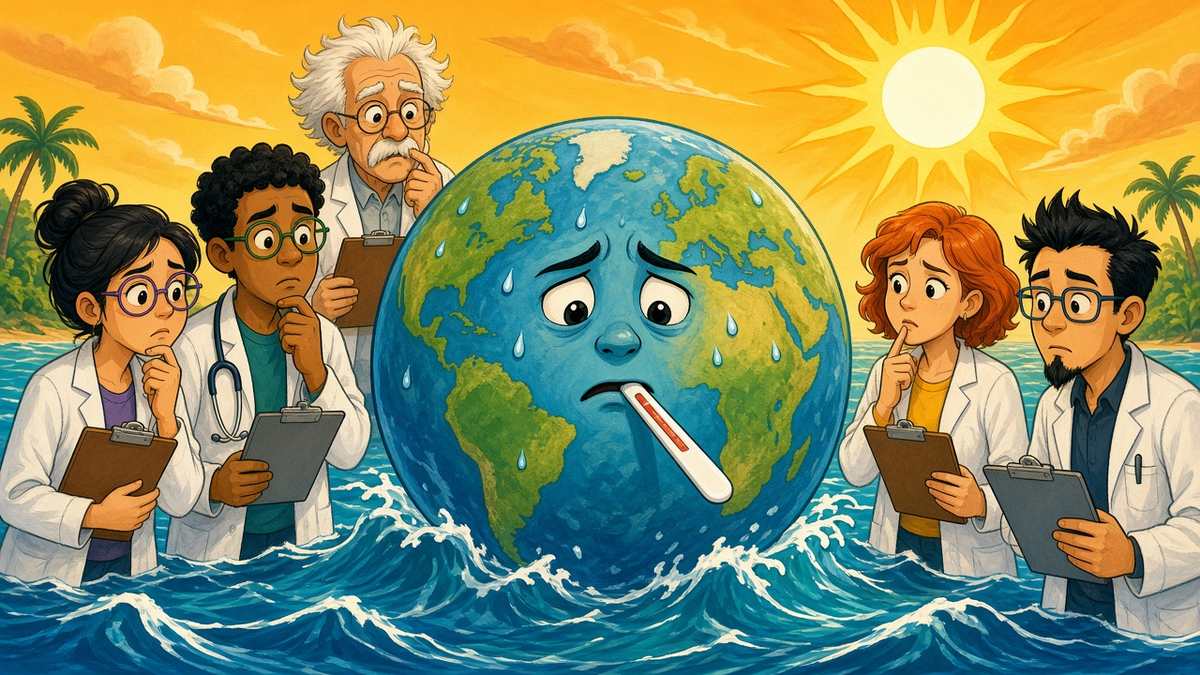
For almost a week, the world has been running a fever it has never had before. Data from the European Union’s Copernicus climate service show that average surface temperatures across the globe sat more than 2C above their 1850-1900 baseline on six days in a row, a streak with no precedent in the record books.
The warmest of those days was Monday 23 November, at 2.24C above the pre-industrial mark. That figure tops the old daily high of 2.05C, logged in 2023, by a wide margin, prompting Berkeley Earth researcher Zeke Hausfather to say the previous record had been “smashed”. Forecasters expect readings to stay close to that level for several more days.
Until now, the planet had crossed the 2C line on only two occasions, in November 2023 and February 2024, and neither episode ran as long or peaked as high. Samantha Burgess of Copernicus described the latest spike as an exceptional anomaly that shows plainly how far the climate has already shifted.
Two forces are stacking on top of each other. The long-term driver is heat trapped by greenhouse gases from burning fossil fuels; on top of that comes an unusually strong El Niño in the Pacific, expected to peak by around January. Nothing this powerful has formed in the Pacific since the 1870s.
Strictly speaking, the Paris Agreement has not been broken, because its 1.5C and well-below-2C goals refer to averages over many years, which Copernicus currently puts at roughly 1.44C. Still, scientists expect more days above 2C into early next year, and because Pacific heat reaches the wider atmosphere with a delay, 2027 is tipped to become the hottest year yet measured.