
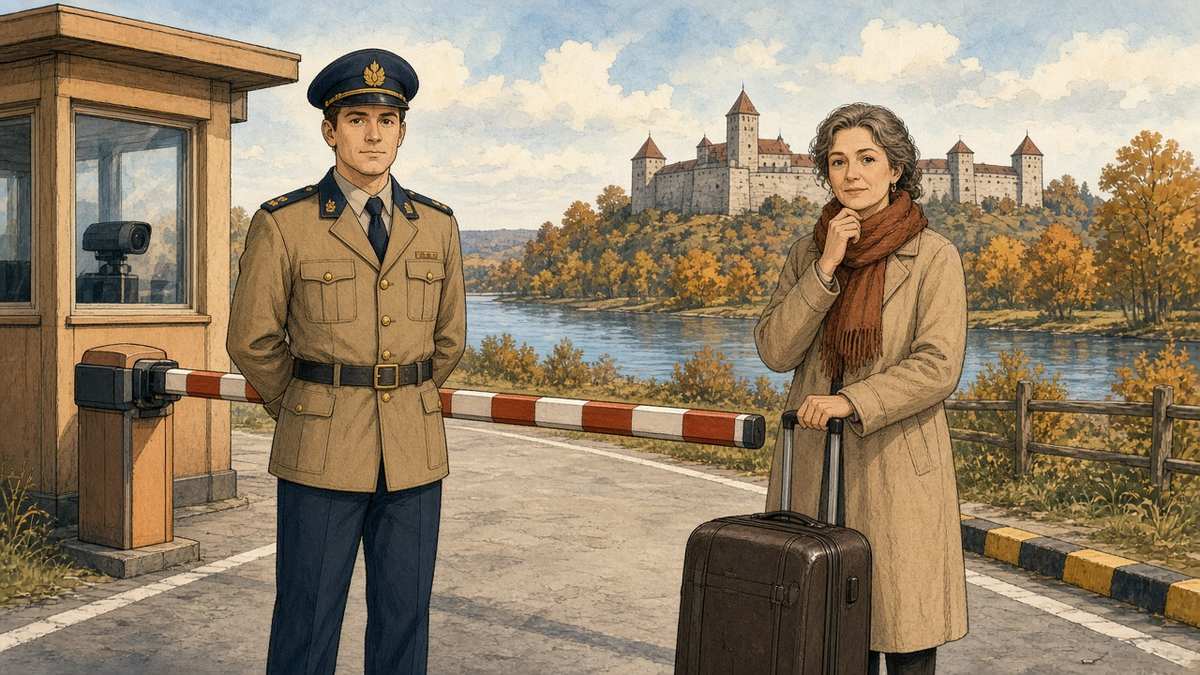
In three days, the last road links between Estonia and Russia go quiet. From 7 a.m. on Tuesday, December 1, the crossings at Narva, Koidula, Luhamaa and Saatse will no longer let anyone through – not pedestrians, not drivers, in neither direction and with no listed exceptions.
Tallinn took the decision on November 20, framing it as an answer to what it calls Moscow’s persistent hostility. The government points to two attacks this year on Estonian defence companies, which the country’s Internal Security Service traced back to Russian intelligence. Prime Minister Kristen Michal has spoken of a dozen incidents attributable to Russia, and says milder signals, such as shorter opening hours and complete checks of every vehicle, made no difference.
Formally, the closure carries a six-month review clause. In a radio interview, however, Michal described it as indefinite in practice, adding that he does not expect the threat to have eased by then and that the order would survive a court challenge, for example from Narva’s city council.
Freight trains through Narva will keep running under strict customs checks for now. Michal said closing the rail link remains a possible next step but stressed that Estonia’s responses need not always be symmetrical, pointing to European measures such as asset freezes and visa bans for Russian fighters.
The burden falls heavily on border areas. Narva, a largely Russian-speaking city, and the Setomaa region in the south-east have deep family and economic ties across the frontier. Officials have urged residents currently in Russia to plan their return quickly; afterwards, travellers will have to go through third countries or fly with connections.
Estonia joins a wider pattern on NATO’s eastern flank. Helsinki sealed the Finnish land frontier back in late 2023, and the three other neighbours further south – Latvia, Lithuania and Poland – have all made crossing far harder. Authorities expect some traffic to shift to Latvian and Lithuanian checkpoints.
