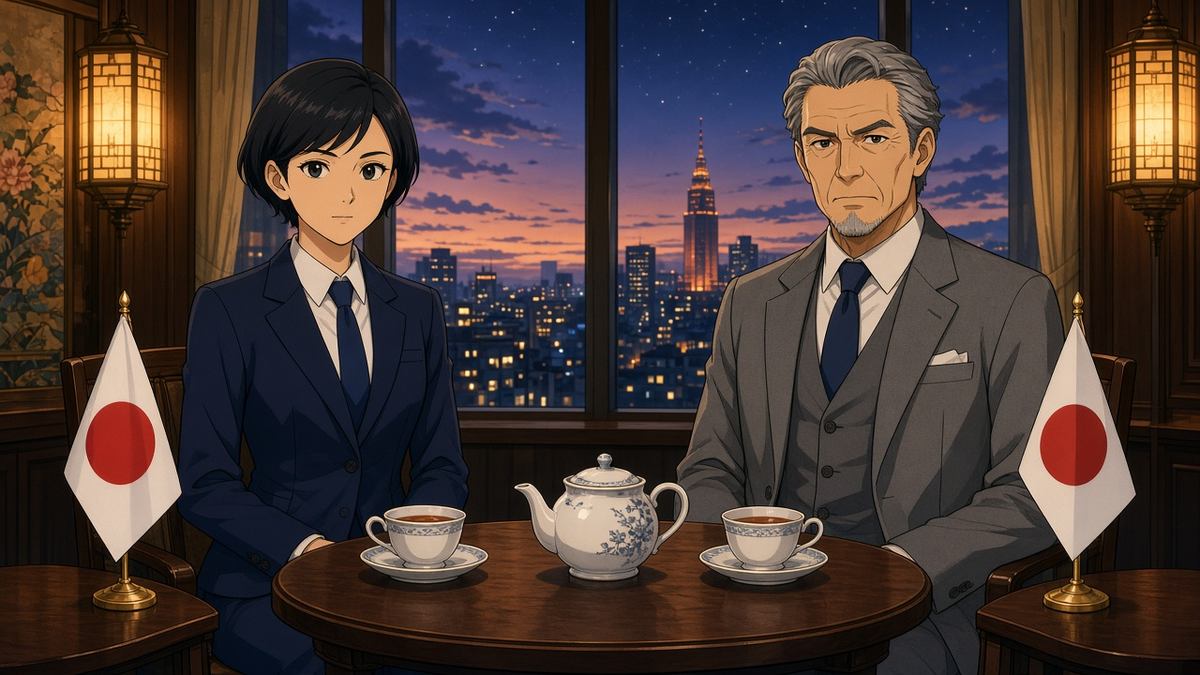
Japan and Russia have spoken at the very top again. On the sidelines of the APEC gathering in Shenzhen, Prime Minister Sanae Takaichi sat down with Vladimir Putin for roughly thirty minutes on Wednesday evening, the first in-person contact between leaders of the two countries since September 2019.
The format was deliberately modest. The two met straight after the welcome dinner, with no agenda published in advance, and Japanese officials described it as an exchange of views rather than formal talks. Tokyo says it had pushed for the encounter. Moscow, for its part, did not immediately confirm that it had taken place.
Takaichi used the time to raise two grievances. She pressed for the immediate release of Yuki Imai, a Hokkaido Shimbun journalist held in Moscow on espionage suspicion since his arrest on Sakhalin in October. She also asked Russia to reverse decrees that put the local business of Japan Tobacco under state control.
Nothing concrete came out of it. Takaichi nonetheless called the opening of a direct line to the Kremlin “the most significant progress”, and said both sides agreed to keep talking at “various levels”. Chief Cabinet Secretary Minoru Kihara added that Japan would act according to its national interest.
The backdrop explains the caution. Relations soured after Tokyo joined Western sanctions over the 2022 invasion of Ukraine, and Moscow has since turned up the heat. In August Putin set foot for the first time on one of the islands off Hokkaido that Russia holds and Japan claims. This week Japan protested an airspace violation by suspected Russian aircraft, and on Thursday its fighters scrambled as two Russian bombers flew north between Yonaguni and Taiwan.
Seen from Tokyo, the half-hour in Shenzhen is less a thaw than an insurance policy: a channel kept open while the sanctions stay in place.