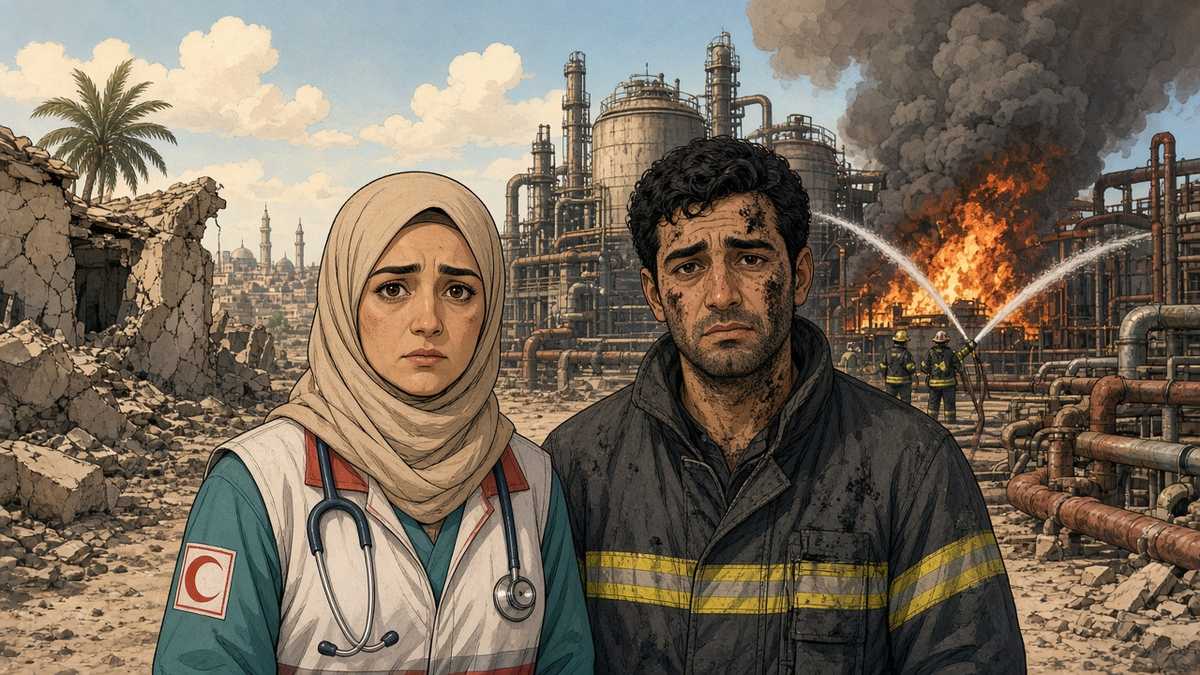
A gas line feeding one of southern Iraq’s biggest power plants blew apart on Saturday, turning a corner of Basra province into an inferno. The rupture happened at the Hartha station, some 20 kilometres north of the city of Basra, and the resulting fire raced beyond the plant’s perimeter into nearby residential streets.
Casualty figures remain uncertain. One early report put the toll at four dead and 35 hurt, while Shafaq News, citing a local source, said at least eight people had been killed, children among them, and more than 30 injured. Officials warned that the number of victims could still grow. According to Basra’s health department, the wounds “vary in terms of severity”; paramedics were stationed at the scene throughout.
It took civil defence crews hours of work to bring the flames under control. Dozens of homes and cars in the surrounding neighbourhoods were damaged, and families were moved out as smoke blanketed the area. The plant itself was shut down. With roughly 1,400 megawatts of capacity, according to the electricity ministry, Hartha is a pillar of the regional grid; how badly its generating units were hit has not yet been disclosed.
Iraq’s head of government, Ali al-Zaidi, demanded a swift investigation to establish why the line failed and who is to blame. He told the health ministry and provincial authorities to commit every available resource to treating the injured, promised compensation to bereaved families and to survivors, and said those affected would be added to the government’s Watan scheme, which aims to hand out a million residential plots.
The disaster is a fresh reminder of how fragile Iraq’s power sector remains. Years of neglected maintenance and thin investment have left plants and substations prone to fires and breakdowns, and the grid routinely struggles to keep up with demand in the blistering summer months.