
The next chapter of the Iran war may be written at sea rather than from the air. President Donald Trump has signalled he will hold off on any fresh strikes until the new year, telling Axios aboard Air Force One that he is “not rushing into any decision” and would revisit the matter once January arrives.
The pause is a bet on economics. The administration believes its naval blockade, which has pushed Iranian oil sales close to zero, is squeezing Tehran harder than bombs could. Secretary of State Marco Rubio has argued that the financial damage already inflicted makes military action unnecessary for now. Trump repeated on Friday that any agreement must end Iran’s nuclear programme entirely, dismissing what he called a “fake deal”. Domestic politics matter too: Republicans lost ground in the November 3 midterms, and Trump has acknowledged that war-driven fuel prices played a part.
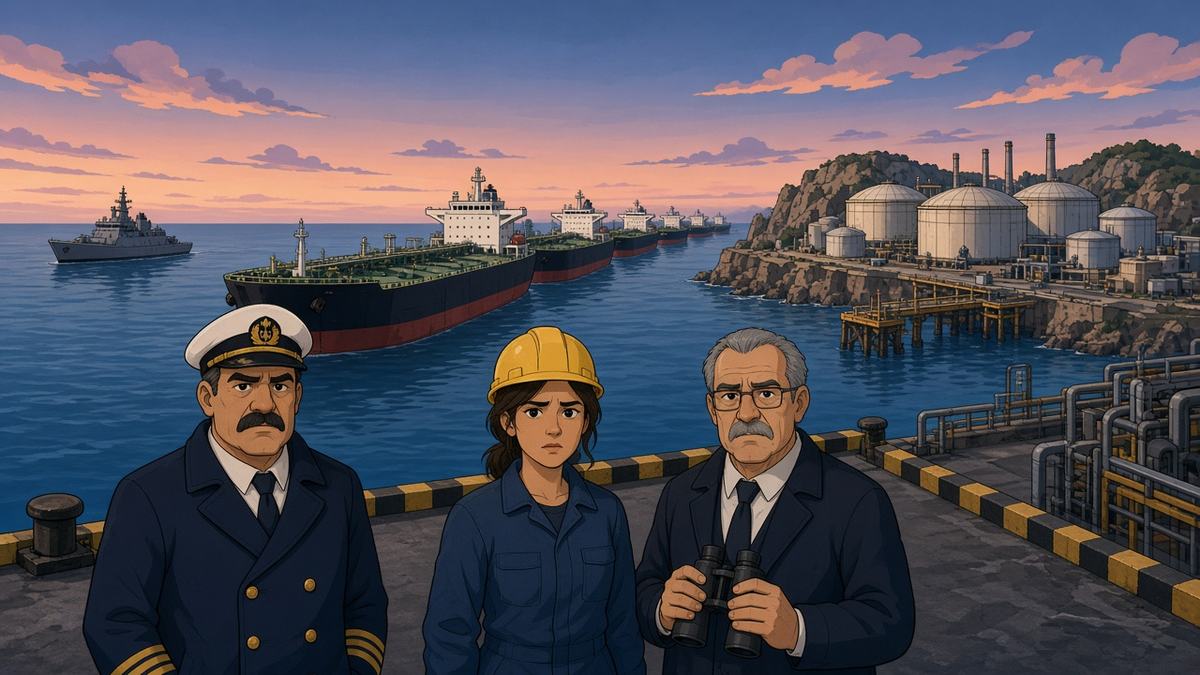
Iran, however, appears to be preparing a direct test. According to imagery from space and vessel-monitoring firms, at least 14 vessels have been massing near Kharg, the island that handles most of the country’s crude shipments. Crews have been assigned and the vessels now fly Iranian flags, with reports suggesting they could set off together toward the Sea of Oman within days. Oil has reportedly also been moved between ships with transponders switched off to mask its origin.
Hardliners are raising the stakes. The Fars news agency, which is close to the Revolutionary Guards, floated a scheme it named “Operation Fereydoun” after a hero of Persian epic poetry. It warns that energy sites in Saudi Arabia, Qatar and the United Arab Emirates could be hit if American forces stop the ships. Tehran has not officially confirmed any sailing plan, although its top diplomat, Abbas Araghchi, vowed on Friday that the siege of its ports would be broken.
That leaves Washington’s timetable looking fragile. If the tankers do sail, the White House may face its choice well before New Year’s Day.
