
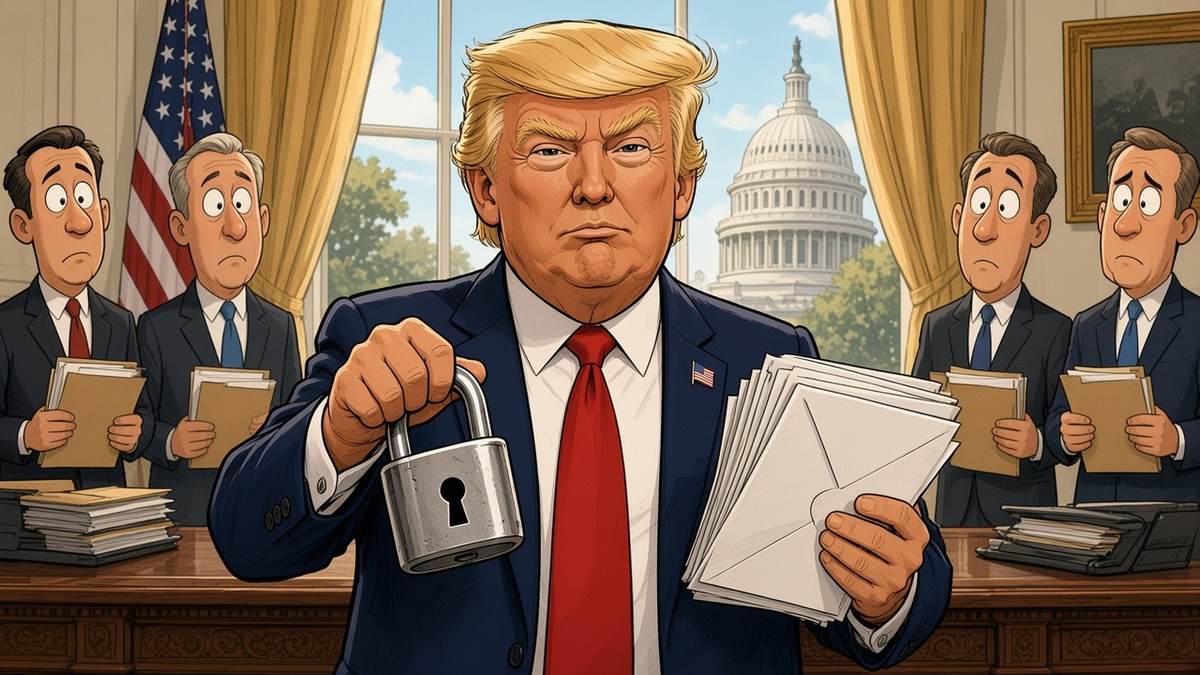
Weeks before Democrats take over both chambers of Congress, President Donald Trump has moved to narrow one of the paths their investigators were expected to use. An executive order signed late on Friday obliges companies holding federal contracts, as well as their subcontractors, to tell the White House and the agency they work for whenever lawmakers ask about their work with the executive branch.
The rule goes further than a simple heads-up. Contractors must follow instructions to hold back material the administration considers covered by executive privilege. Firms that ignore the order risk losing existing contracts and could be suspended or barred from future federal business. Agencies are told to coordinate any response.
The White House presents the step as housekeeping. Its fact sheet speaks of protecting “confidential information” and national security work, and officials argue that contractors answering Congress on their own could expose privileged material and drag the government into expensive legal fights.
Critics see a pattern. Only days earlier, White House Counsel Will Scharf told federal agencies that employees need approval from the White House before agreeing to testify on Capitol Hill. Democrats, who won the midterm elections this month, have promised to examine the president’s family business, federal contracting, immigration enforcement and the handling of the Epstein files.
The groundwork is already being laid. Robert Garcia, the California Democrat in line to lead the House oversight panel, has written to twelve people close to the president, family members and former aides among them, urging them to keep their records intact. Vice President JD Vance is on that list, and so is Stephen Miller, who now runs the West Wing as chief of staff.
Whether the order survives is an open question. Presidents can shield certain confidential communications, but judges can step in when Congress and the White House collide over access to information. A first real test could come once the new Congress starts issuing subpoenas in January.
