
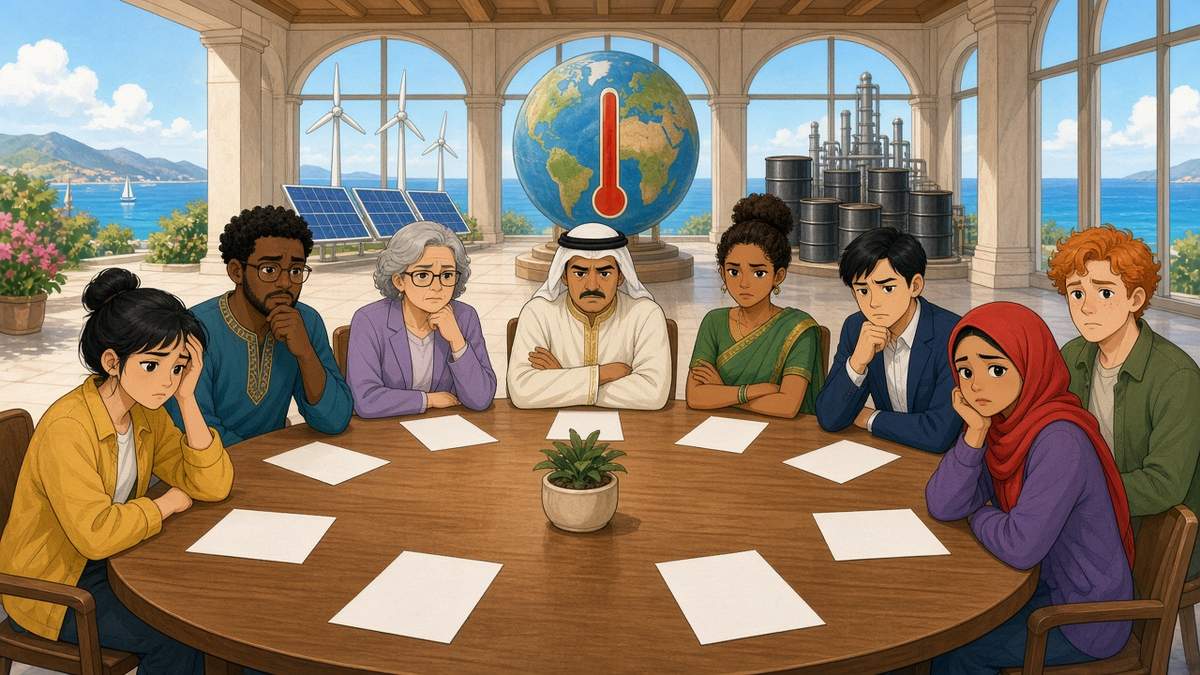
The longest UN climate summit in history has ended with nothing to show for its overtime. After two weeks of scheduled talks and roughly two extra days of wrangling, COP31 in Antalya, Türkiye, closed on Sunday without the overarching agreement its organisers had hoped would set the course for global climate policy.
The breaking point was an omission. The fourth draft of the so-called cover decision did not name coal, oil or gas anywhere, offering only an indirect nod to the 2023 pledge to transition away from them. For the European Union, represented by Irish climate minister Darragh O’Brien, that was a red line. He accused “some oil states” of hijacking the conference. Panama, Vanuatu, Belize and the Marshall Islands joined the refusal, and because UN climate decisions require consensus, those objections were enough to sink the package.
Murat Kurum, the Turkish minister who chaired the summit, accepted the outcome from the podium, saying the decisions could not be adopted without agreement. He ruled out a fifth draft. Australia, which co-led the event and steered the negotiations, had pushed electrification as a compromise theme, proposing that electricity cover 35 percent of final energy use worldwide by 2035.
Critics said the draft gave too much ground elsewhere. It kept support for carbon capture, which Saudi Arabia defended on behalf of Arab states as one of many legitimate options, and it dropped a $120 billion goal for adaptation funding, angering poorer nations. Marshall Islands envoy Kathy Jetnil-Kijiner said vulnerable countries could not survive on “empty promises.”
Not everyone wanted to walk away. China backed the text despite reservations, India neither accepted nor rejected it, and the African Group said it would not block consensus even though finance got short shrift.
UN Secretary-General António Guterres called the result deeply disappointing, insisting that while delegates disagreed, “there is no ambiguity in the science.” With warming widely expected to overshoot the 1.5C goal of the Paris Agreement, the fossil fuel question now passes, unresolved, to next year’s summit.
