
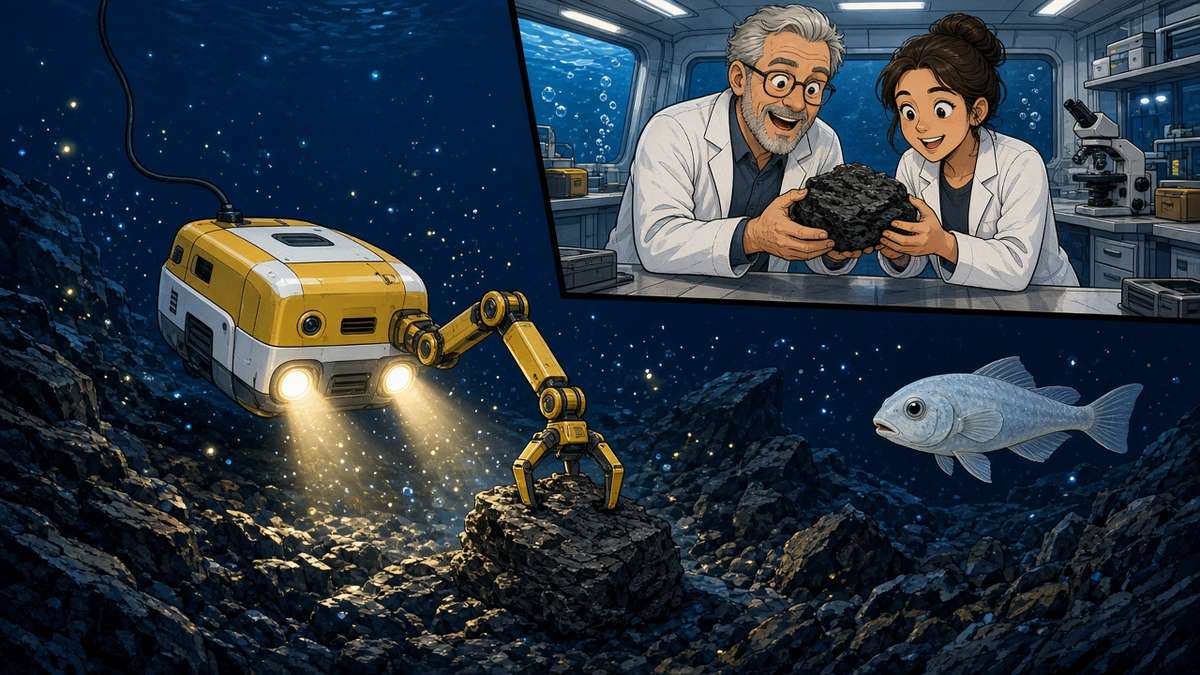
Geologists probing the walls of the Mariana Trench have stumbled on something their textbooks say should not exist: the remains of a violent, gas-driven eruption some six kilometres beneath the waves. The thin, flat-lying layers of fragmented volcanic rock, found on the flank of the Challenger Deep, are the deepest pyroclastic deposits ever documented in any ocean. The study appeared on Monday in the journal Frontiers in Earth Science.
The samples were collected in late 2024 by the robotic submersible Jason/Medea for a team led by Robert Stern, an emeritus geoscience professor in Dallas, Texas. The robot cannot reach the trench floor at almost 11,000 meters, but over seven dives along a stretch of some 300 kilometers it was able to scrape material from the steep slopes above it.
Two things make the discovery puzzling. The forearc, the zone between the trench and the chain of volcanoes behind it, is normally too cold for rock to melt, so fresh lava there is rare. And at such crushing pressure, gas trapped in magma has almost no room to expand, which is what drives explosive eruptions on land. Stern admitted the team had been “very surprised”. An outside expert, the French geochemist Sune Nielsen, said the result was the last thing he would have expected. One idea is that supercritical fluids were involved, but the vents themselves have not yet been located.
The rocks also hint at how the region is evolving. Older material dominates in the east of the surveyed segment and younger volcanic rock in the west, suggesting the seafloor is being pulled apart mechanically on one side while fed by fresh magma on the other. Should the zone where one plate dives beneath the other keep broadening, it may in time alter how the crust drifts throughout this corner of the ocean. The team says more dating is needed and plans to go back.
