
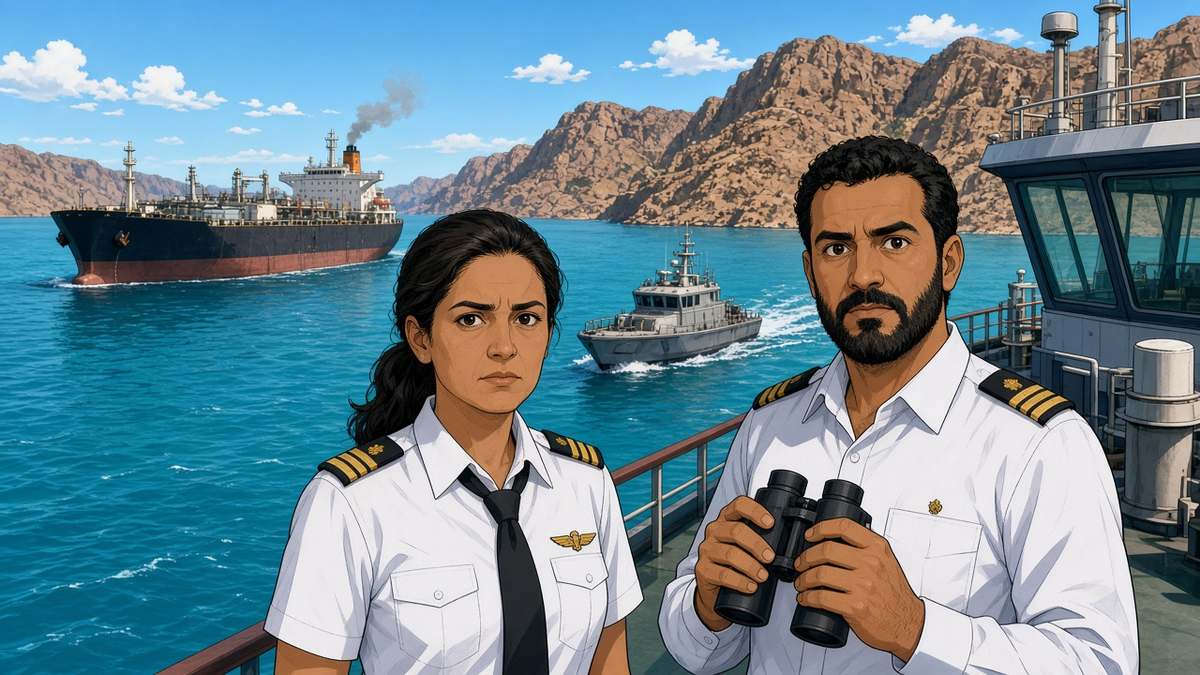
Tanker crews leaving the Gulf have had another weekend to forget. In roughly fifteen hours spanning Friday afternoon and Saturday morning, three vessels sailing outbound past Khasab on Oman’s Musandam peninsula were struck by unidentified projectiles, and fires broke out on board. So far no one is reported to have been hurt.
The Joint Maritime Information Center, a monitoring cell run by Western navies, identified two of them. First the Torkel, flying Hong Kong’s flag, was hit at the rear and later anchored. Within the hour its fellow Hong Kong-registered tanker Arina suffered a strike to the engine room. A day earlier a third ship, still unnamed, had been hit near the bow. Seven tankers have now been damaged in the area in barely a week.
Tehran insists the ships wandered into closed waters and hit mines, an explanation nobody has independently confirmed. The JMIC keeps its threat rating at the top level and expects further strikes on vessels that stay close to Oman’s coast.
The weekend fits a wider trend. October was the worst month of the conflict so far for shipping, with Britain’s UKMTO centre counting upwards of 30 incidents in the strait and neighbouring waters; November had passed 22 by Sunday. The real figure is probably larger, because many owners no longer report hits and some captains go dark, turning off their locators to sneak through.
Behind the escalation lies Washington’s naval blockade of Iranian oil, back in force since July after a brief deal fell apart. Tehran’s foreign ministry spokesman Esmaeil Baghaei vowed on Monday to resist it with “all its tools”. For insurers, shipowners and oil traders, the message is that the strait remains one of the most dangerous stretches of water on the planet.
