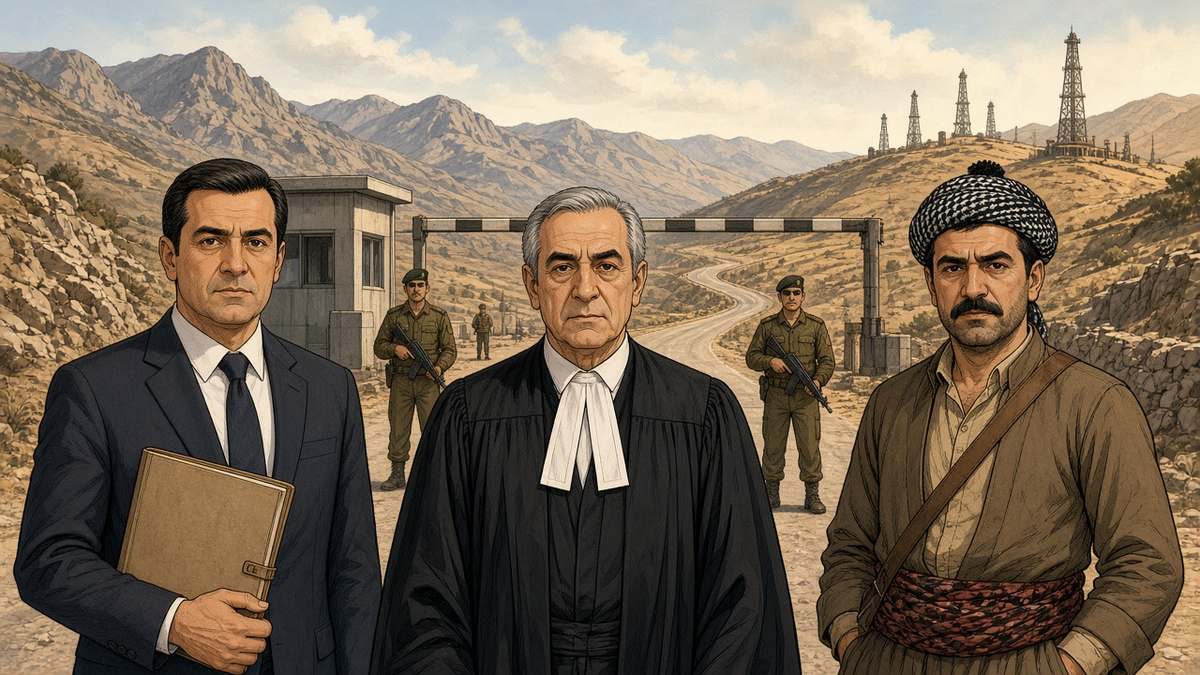
A long-running tug of war between Baghdad and Iraq’s Kurdish north has tilted sharply toward the capital. On Wednesday the Federal Supreme Court declared that guarding the country’s international frontiers is a job for the central state alone, and that federal troops may be sent to every border, including the stretches the Kurdistan Regional Government has policed for decades along Turkey, Iran and Syria.
The interpretation was requested by Prime Minister Ali al-Zaidi, who on Tuesday had ordered federal agencies to take over all Kurdish-run crossings. Oilfields guarded by Kurdish forces in four provinces, among them Kirkuk and Nineveh, were to pass to the oil ministry as well. The orders came after investigators looked into alleged smuggling at the state-owned North Oil Company.
The judges, with two dissenting, backed him on almost every point. Federal authorities may supervise all staff at crossings, introduce a single digital customs network with uniform duties nationwide, and audit fees and taxes before they flow to the national treasury, though customs must still be run in coordination with the regions. The oil ministry may inspect fields, contracts and exports, while day-to-day management remains a shared task. The verdict cannot be appealed.
Perhaps the most explosive passage limits Kurdish authority to the territory Erbil governed on the eve of the 2003 US-led invasion. Control gained on the ground since then, the court said, confers no constitutional power.
Kurdish leaders reacted with alarm. Regional President Nechirvan Barzani voiced “deep concern” about what he called military language, and Prime Minister Masrour Barzani described the measures as “baffling”. The two dominant Kurdish parties, usually bitter competitors, issued a joint statement calling any erosion of the region’s rights a “red line”. Baghdad has not said when or how the takeover will happen, and analysts doubt it will be easy to enforce.