
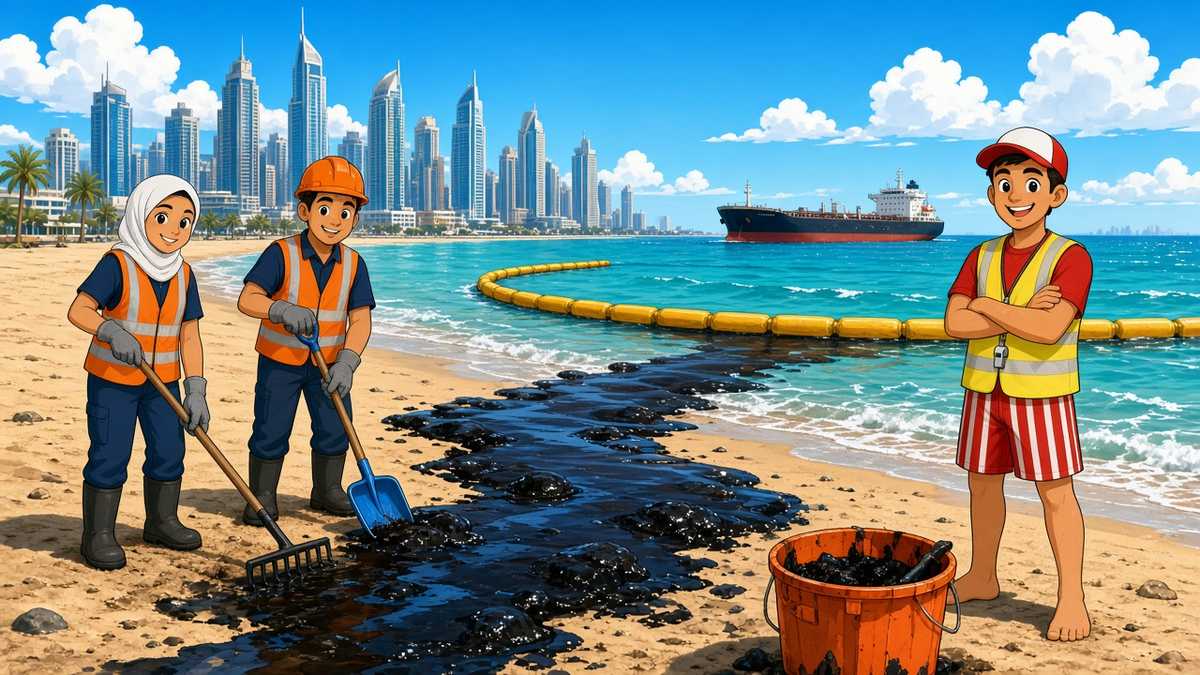
For several days people from Dubai up to Ras Al Khaimah had been wondering about a sharp smell of fuel drifting in from the sea. The answer is now washing onto the sand. Oil from a damaged tanker has reached the coast near Umm Al Quwain, turning patches of water black and prompting the emirate to shut every beach and coastal area until experts finish their assessments. Neighbouring Sharjah shut its Al Hamriya shoreline to be safe and Ras Al Khaimah followed with its own closures.
Satellite analysis points to the Gem No.2, a 330-metre Panama-flagged crude carrier that caught fire after being hit by a projectile in waters close to Hormuz on 9-10 October. Its crew, 22 sailors from India, got off the burning ship alive. For more than a week only a thin trickle of oil was visible, but from 19 October the slick grew rapidly and soon stretched over 35 kilometres.
The federal environment ministry says the odour poses no health risk, yet it urges people to keep away from any oil on the shore and asks fishermen to avoid affected waters. Crews are laying booms, cordoning off sections of coast and cleaning up contaminated stretches.
What worries researchers most is the drift towards Siniyah and Khor Al Beidah. The two islands form a protected habitat of international importance, with reefs, seagrass meadows and tidal marshes where green turtles feed and a rare, critically threatened guitarfish species lives. How bad the damage becomes depends on the amount and type of crude, on how fast it evaporates and on how well the clean-up works. The 1991 Gulf War offers a warning: tar mats left on northern Gulf beaches back then lingered for years.
The spill adds an environmental cost to a shipping war in the Hormuz region that has already disrupted trade and pushed up oil prices.
