
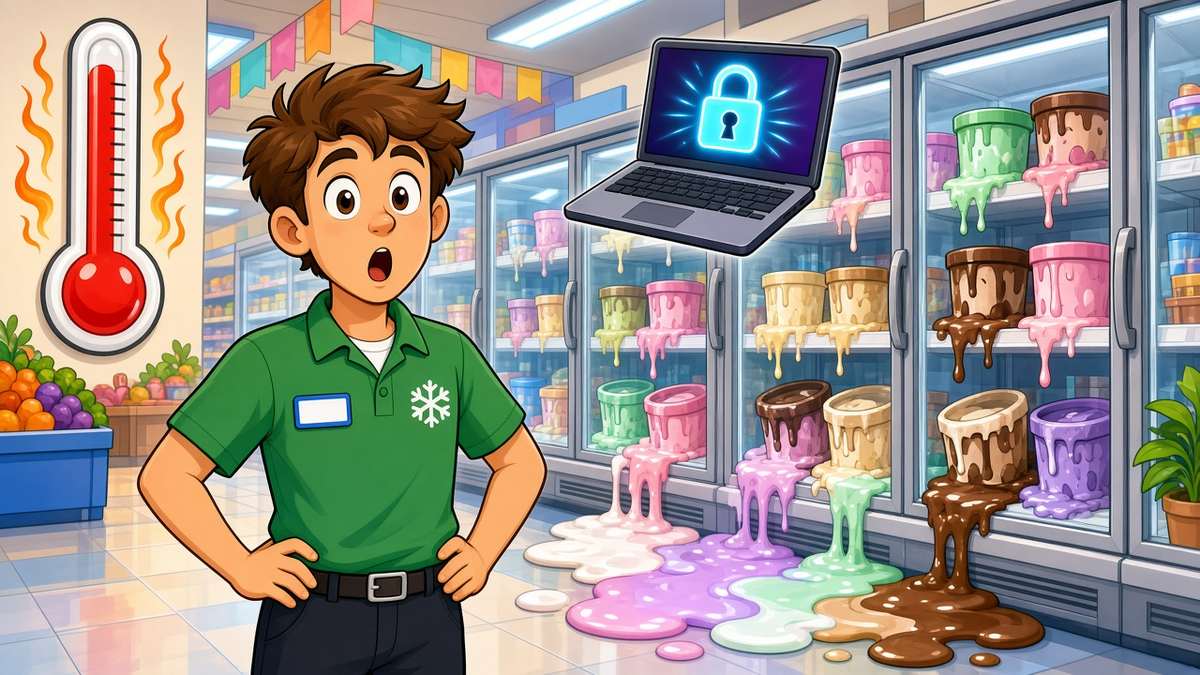
Four weeks after freezers across France suddenly started cooking their contents, Paris says it knows who flipped the switch. Speaking on the sidelines of a G7 gathering in Paris on Monday, Jean-Noël Barrot, who runs French diplomacy, said that Iran’s Revolutionary Guards were behind the attack, calling it an act of “unprecedented aggression”. Iran’s ambassador was summoned, and Barrot promised sanctions at European level.
The operation on 11 and 12 October hijacked the digital thermostats of refrigeration units in as many as 700 shops. Some cabinets that normally sit at minus 27C were pushed past 50C. Staff threw out whole stocks of meat, dairy and ice cream, and several units overheated badly enough to start fires. Retail estimates suggest the damage across the country could run to several tens of millions. The manufacturer of many affected units said a number of them were outdated or ran old firmware.
Paris prosecutor Laure Beccuau traced the attack to Shahid Kaveh, an offensive cyber unit tied to the Revolutionary Guards, citing Farsi traces and IP addresses linked to devices inside Iran. Her office has opened a case against the group’s leader and two deputies and is seeking international arrest warrants. Tehran typically denies running such operations.
Investigators are also looking at a second wave earlier this month that disrupted cooling systems at more than 100 sites across Europe, including cold stores of France’s blood service, where alarms let technicians save the stock in time. Whether the two campaigns are connected has not been established.
Kaja Kallas, the EU’s foreign policy chief, said ministers would take up the matter at their meeting next week. The bloc listed the Revolutionary Guards as a terrorist organisation earlier this year after France ended its long resistance to the move.
