
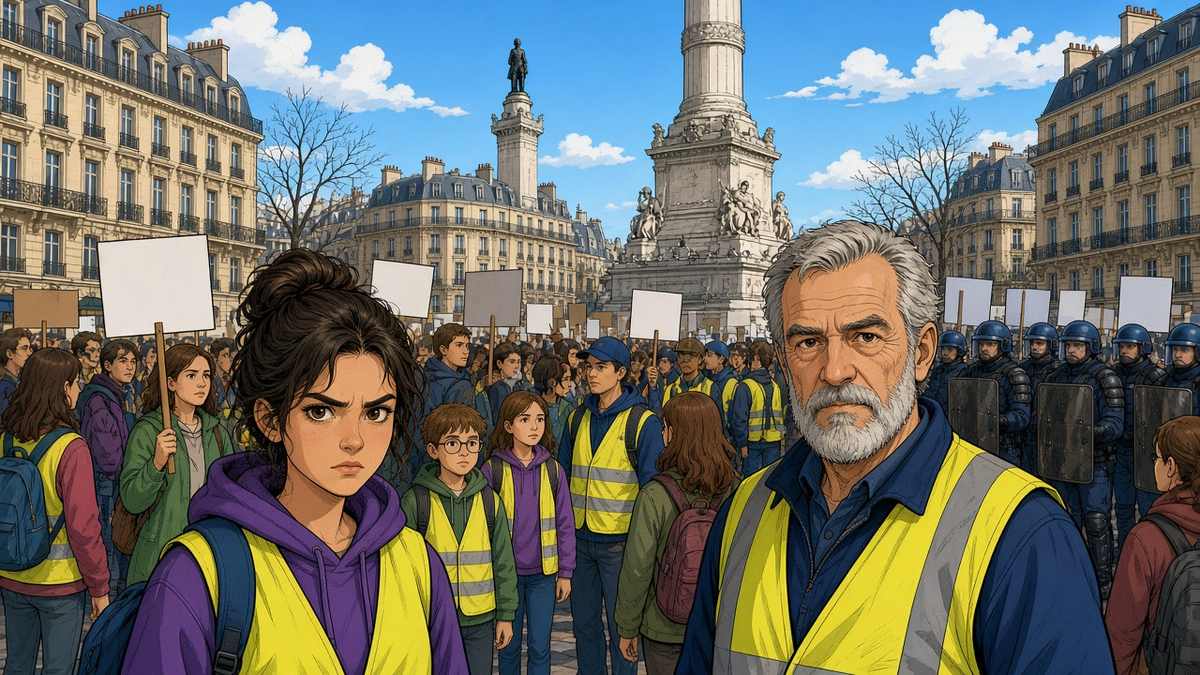
Turnout is slipping, but the movement shows no sign of fading. For the fifth Saturday running, people marched in cities across France, around 106,000 of them according to the interior ministry, a quarter of whom were in the capital. The groups behind the marches put the total at roughly twice as many. A week earlier officials had counted 146,000.
The coalition on the streets is unusually broad. Yellow vest activists marched alongside high school and university unions and teachers, each bringing their own grievances: the cost of living, crumbling classrooms and missing staff, better protection for children, and a draft law that would give police and gendarmes extra legal cover when they open fire. Unions describe it as a “license to kill”; Marine Le Pen’s National Rally backs it, and lawmakers are due to vote on it next week.
In the capital the procession from Place de la République to Place de la Nation stayed largely calm until the end, when officers used tear gas to clear the square. Similar scuffles were reported in Bordeaux and Lyon. By early evening 219 people had been detained nationwide and ten officers had suffered minor injuries, with some 70,000 police and gendarmes deployed. In Lyon, protesters assaulted a BFMTV crew, and one suspect was later arrested. Press freedom group RSF has recorded more than 70 cases of journalists being obstructed during recent demonstrations.
The government’s offer so far is a 0.6 percent rise in the minimum wage, which unions have dismissed out of hand. Yellow vest figure Benjamin Ball summed up the mood with a baking metaphor, saying protesters had been handed “crumbs” when they wanted “the whole bakery”. A union strike is planned for Tuesday, which also marks eight years since the yellow vest movement began, and activists have already called a sixth Saturday of protests.
