
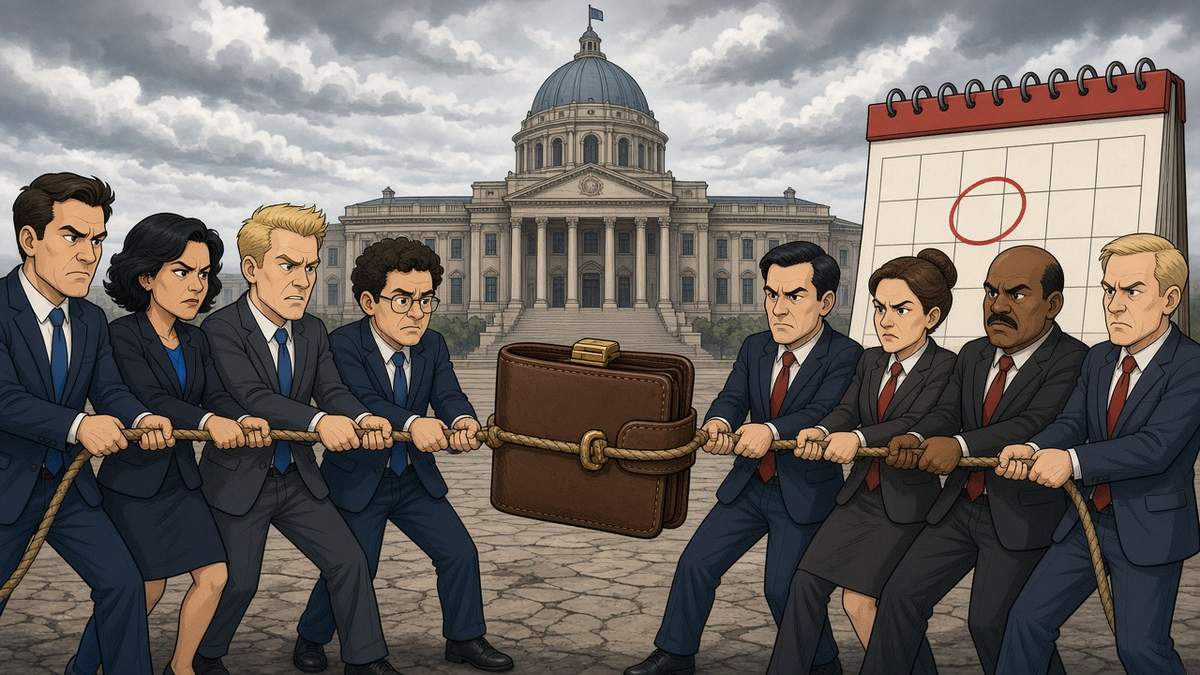
Washington has three weeks to avoid a pre-Christmas government shutdown, and the question that could decide it has little to do with routine budgets. Funding for most federal agencies expires on December 11, and Democrats are arguing among themselves over whether to use that moment to choke off money for the war with Iran.
The war began roughly ten months ago without a congressional declaration, and Democrats campaigned hard against it before winning this month’s elections. They will not hold the majority until January, but the Senate’s 60-vote rule already makes their support necessary for any stopgap bill. Virginia’s Tim Kaine wants to attach language ending war funding, and Maryland’s Chris Van Hollen, who is challenging Chuck Schumer for the party’s Senate leadership, has made the same demand central to his bid.
Several of the people about to run key House committees are resisting. Rosa DeLauro, the incoming chair of the Appropriations Committee, has said the administration needs congressional approval for more money, yet she prefers a short extension into February and doubts voters believe “that shutting the government down ends the war.” Gregory Meeks, set to lead the Foreign Affairs Committee, said a shutdown would only hurt services Americans rely on. Hakeem Jeffries insists the war “should end today” but has not said how.
Republicans, some of them uneasy about the conflict too, warn that cutting funds abruptly would endanger troops in the region. Senator Thom Tillis wants stockpiles such as Patriot interceptors refilled and has floated reconciliation, a procedure that would let the party pass spending without Democratic votes. President Trump favours that route, but GOP leaders are unsure it can be done before the deadline.
However the standoff ends, it offers an early look at next year, when Democrats will control the purse strings outright.
