
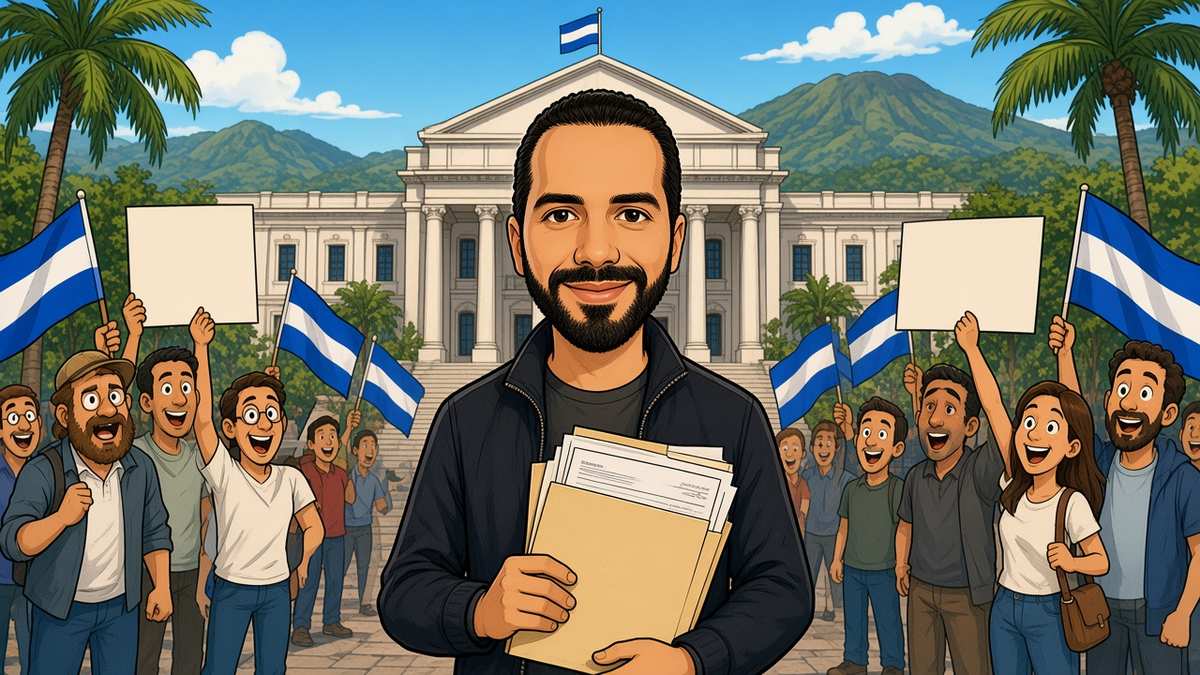
El Salvador’s most popular politician has made it official. Late on Thursday, President Nayib Bukele walked into the Supreme Electoral Tribunal in San Salvador and registered to seek a third term in a row, again pairing up with his deputy, Félix Ulloa. His Nuevas Ideas party later said the tribunal had accepted the filing.
Voters go to the polls on February 28, 2027, and the outcome is widely seen as a formality. The road to this candidacy was paved by Congress, where Bukele’s party holds a supermajority. In July 2025 lawmakers scrapped presidential term limits, stretched each term from five years to six and abolished runoff votes. They had already pulled the election forward by two years. A victory would let Bukele, first elected in 2019 and re-elected in 2024, govern until 2033.
His standing at home is extraordinary. A CID Gallup survey released in late October put approval of his performance at 94 percent, driven above all by a crackdown that dismantled the gangs once terrorising the country. He is now taking that approach abroad, having sent around 2,500 troops to Haiti last month.
Outside the tribunal, the 45-year-old brushed aside foreign criticism and insisted to cheering supporters that his country enjoys “total, complete open democracy” and vowed there would be no going back to the bad old days.
Rights groups see a very different picture. Human Rights Watch researcher Juan Pappier argues that Bukele has stacked the judiciary with loyalists and reshaped the constitution in his favour, while opponents have ended up behind bars or abroad. In his view, an unchecked accumulation of power is what defines this presidency. Researchers behind the Bertelsmann Transformation Index go further, saying the country now functions as a single-party system in all but name.
The February vote is therefore less a contest than a referendum on a bargain many Salvadorans appear willing to accept: security first, checks and balances later.
