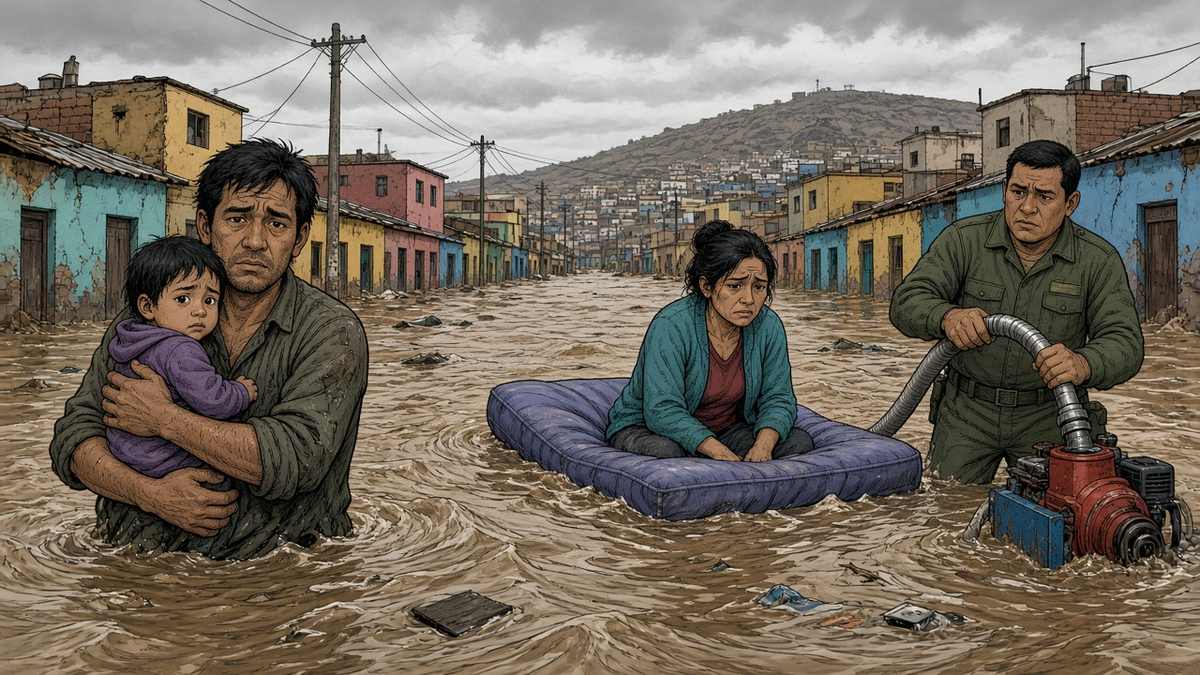
South America’s Pacific coast is getting an early taste of what forecasters fear could be the most powerful El Niño on record. Torrential rain on Thursday and Friday turned streets into rivers in northern Peru and pushed Ecuador’s death toll from weeks of wet weather to 34.
In Piura, a city of several hundred thousand in Peru’s north, around twelve hours of non-stop rain left water waist-deep in many neighbourhoods. Civil defence chief Luis Vásquez put the number of affected families at roughly 2,000, a preliminary figure. The flooding reached the historic main square, shops and government offices. At the Jose Cayetano Heredia Hospital, staff moved patients out of a respiratory ward and into the auditorium, while the most serious cases were shifted to intensive care. One resident, standing beside a fridge floating in his living room, said this was “just the first heavy rain” of the season.
Troops brought in pumps to drain the worst-hit districts, though residents grumbled that several stopped working for lack of diesel. Forecasters see no quick relief, warning of further downpours through the coming days. Fujimori, who heads the government in Lima, called off a foreign trip and promised to see the damage for herself.
Ecuador has fared worse. Officials there count 34 dead nationwide, and tens of thousands of people have seen homes or livelihoods damaged. Manta, a fishing and port city, was swamped when two overflowing rivers sent water surging through town, leaving some people paddling on mattresses. One resident said she had lived in mud for four days, and burst sewers had added a foul smell.
Both nations have declared national emergencies tied to El Niño, a periodic warming of the eastern tropical Pacific that reshapes rainfall around the globe. The Peruvian navy says the same phenomenon is behind giant waves that recently battered harbours and forced many of them to close for a while.