
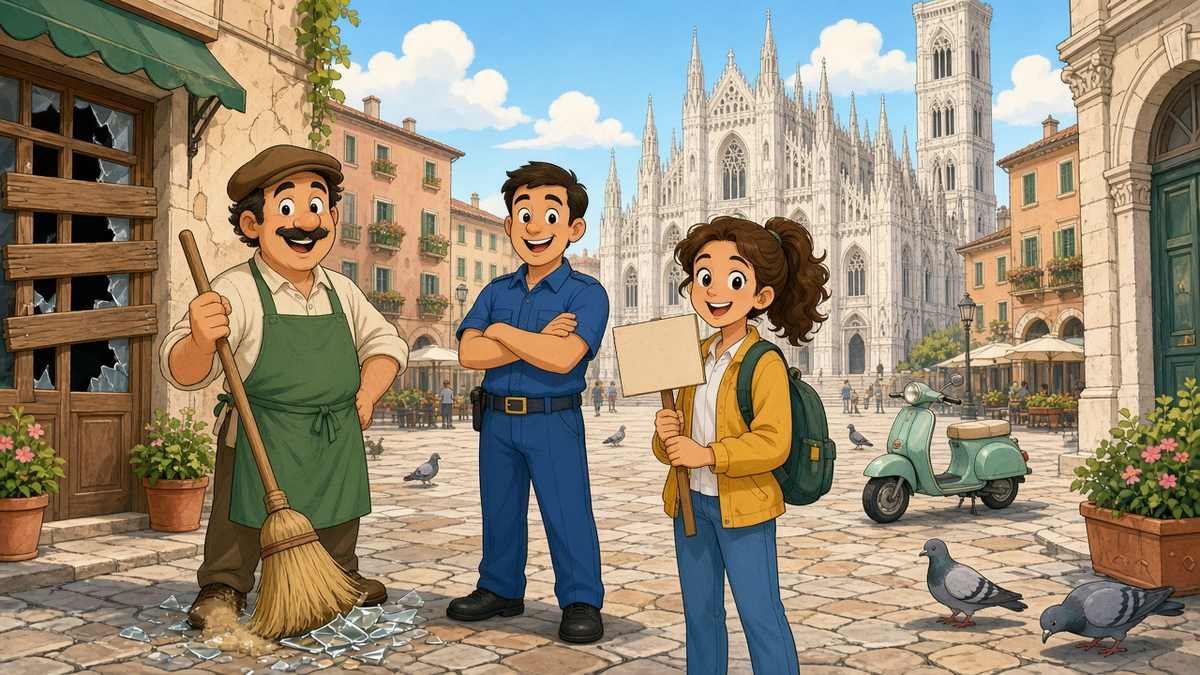
Milan spent the weekend counting broken shop windows. What began on Saturday as a march against soaring prices turned into two days of rioting and looting in the heart of Italy’s business capital, and on Monday Prime Minister Giorgia Meloni summoned the heads of the police and intelligence services to Palazzo Chigi in Rome, together with ministers Matteo Piantedosi (interior) and Guido Crosetto (defence) and both of her deputies, to decide how to respond.
Saturday was supposed to belong to the unions. In Rome the CGIL confederation filled Piazza del Popolo – more than 100,000 people by its own count – and its leader Maurizio Landini called a nationwide general strike for 20 November. The grievances are familiar across southern Europe: expensive fuel, painful energy bills, pay that trails behind prices and a shortage of flats ordinary families can afford.
In Milan the mood turned. Hooded youths dressed in black pelted riot police with stones, bottles and flares near the cathedral square and piled up barricades; officers answered with tear gas. On Sunday small groups roamed the centre, smashed their way into shops and supermarkets, grabbed what they could and vanished again. More than 200 people were held, roughly four in five of them under 18. Security services believe many raids were arranged at short notice on TikTok and so far see no link to the radical left. The unrest was not limited to Milan: Turin, Bologna and Bergamo had their own skirmishes.
Meloni promised “new tools” against those who exploit protests, insisting that the right to protest does not include setting cities alight. Her deputy Matteo Salvini wants preventive detention for known troublemakers extended to minors. The unrest has also become a political brawl: Piantedosi mocked Milan’s centre-left mayor Giuseppe Sala as “radical chic” after Sala complained that too few officers had been on the streets. Opposition leader Elly Schlein warned the government not to use the violence to drown out the thousands who march peacefully because their wages no longer stretch to the end of the month.
With France still clearing up after its own wave of unrest, Rome fears contagion – and the strike date in November is now circled in red.
