
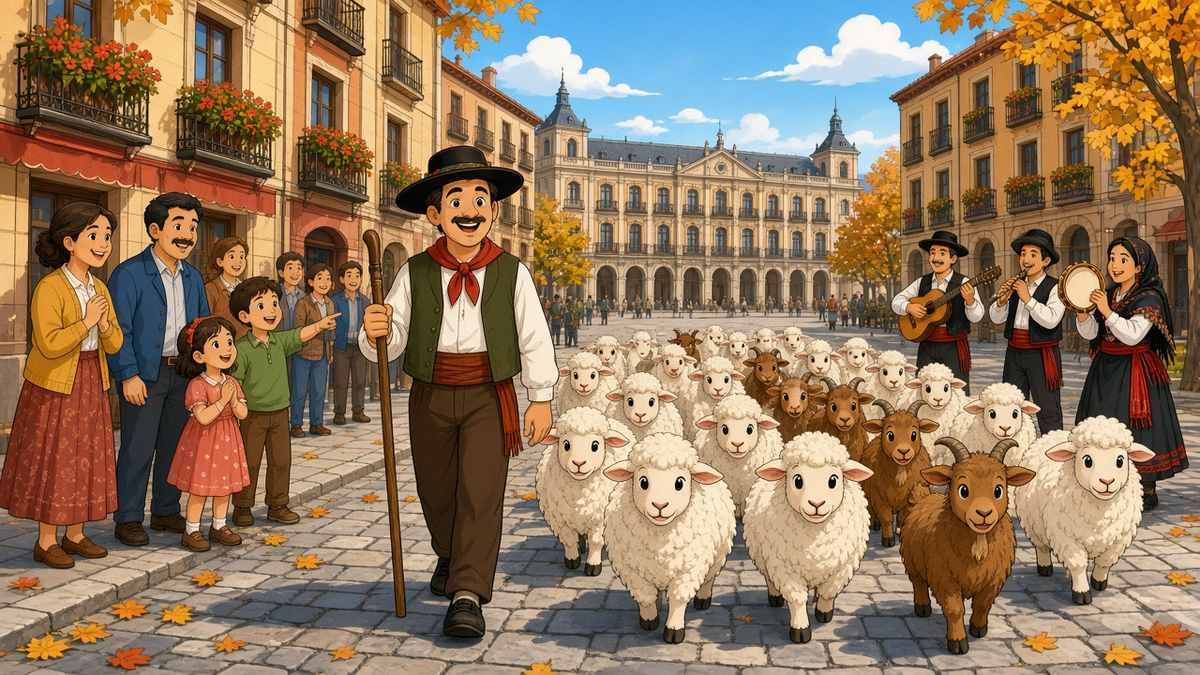
Madrid traded traffic for livestock on Sunday. Some 1,250 sheep and 160 goats trotted through the historic centre for the city’s 33rd Transhumance Festival, an event that recreates the ancient seasonal movement of herds to fresh pasture. This year, though, the animals had to change course.
The obstacle was a human one. For about three weeks, housing activists have been camping on the Puerta del Sol, the square that marks kilometre zero of Spain’s road network, to protest soaring rents. Rather than march the flock through the tents, organisers dropped the usual stretch across Sol and the walk to City Hall at Cibeles. The herd instead left the Casa de Campo park, crossed the Puente del Rey and wound along Calle Mayor, past the Plaza Mayor and down Calle de Toledo before turning back.
The ceremonial high point moved too. Under a pact signed in 1418 between the shepherds’ guild, the Mesta, and the town council, herders owe 50 maravedís, an old Castilian coin, for every thousand animals crossing the city. This time the toll was handed over on the Plaza de la Villa, where councillor Borja Carabante received it amid folk costumes, music and dancing.
Beyond the photo opportunities, the festival carries a message. Since 1994 it has defended Spain’s network of drove roads, which according to city figures stretches for roughly 125,000 kilometres and is protected by law. Herds that graze along them keep landscapes open, support biodiversity and clear vegetation that could otherwise fuel wildfires.
For the crowds lining the narrow streets, the point was simpler: a river of wool and bells flowing between centuries-old facades, with children perched on shoulders to get a better look.
