
A largely overlooked displacement crisis is unfolding on the Ethiopia-Kenya border. Local Kenyan officials put the number of arrivals at as many as 50,000, who came over at Moyale from October 22 onward to escape fighting on the Ethiopian side, and aid agencies say more may follow.
Moyale straddles the frontier, with one half in Ethiopia and the other in Kenya’s Marsabit County. Women and children make up much of the influx. Most new arrivals are being taken in by relatives and local families, while others are camping in schools, churches and five makeshift sites.
Food tops the list of needs, followed by clean water, shelter, sanitation and health care. The International Organization for Migration warns that the strain is spreading to the hosts, whose own resources were already thin. For Nomagugu Ncube, IOM’s chief in Kenya, the task is twofold: help those who fled and also the families taking them in, which she called urgent.
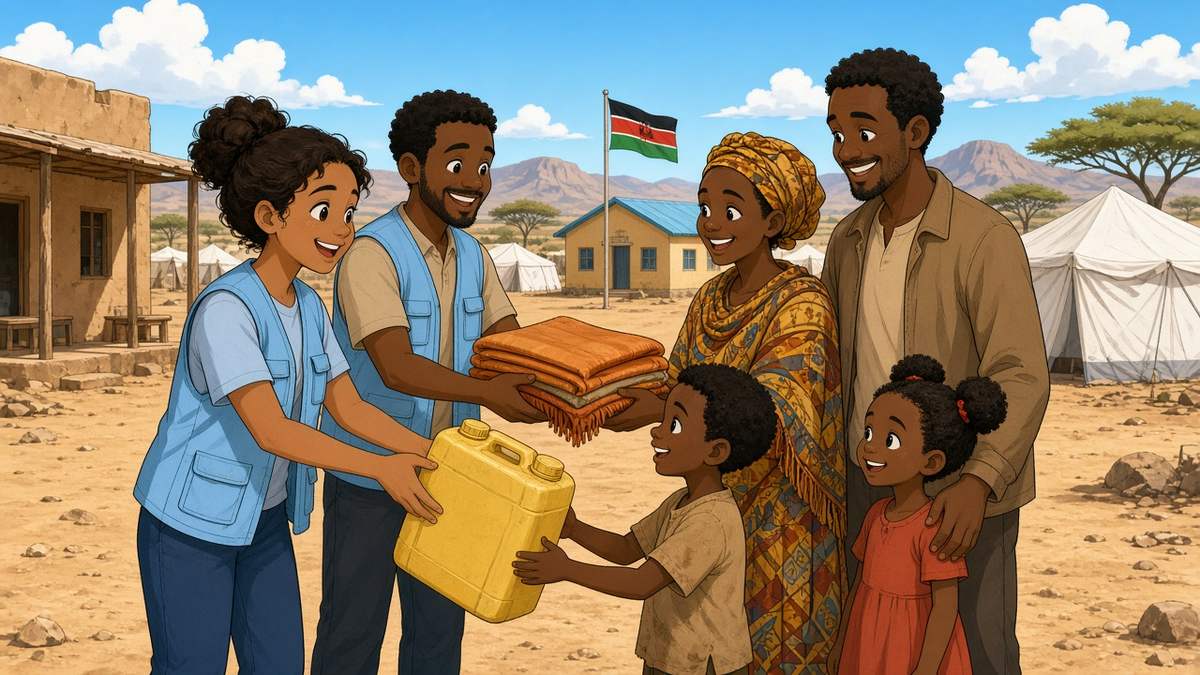
UNHCR has flown an emergency team to the town and is moving household items and shelter kits for close to 12,000 people, with plans to scale up. Working with Kenya’s Department of Refugee Services, it is also looking for safer places to stay further from the border. UNICEF, the World Food Programme and the Kenya Red Cross are part of the effort.
Together the UN agencies are appealing for 8.9 million dollars to cover up to 50,000 people for three months, paying for meals, water, shelter, registration and child protection. Nairobi and its partners are already preparing for as many as 80,000 arrivals.
Officials stress that every figure is preliminary while registration continues. How long people will need to stay depends on a conflict across the border that shows no clear sign of easing.
