
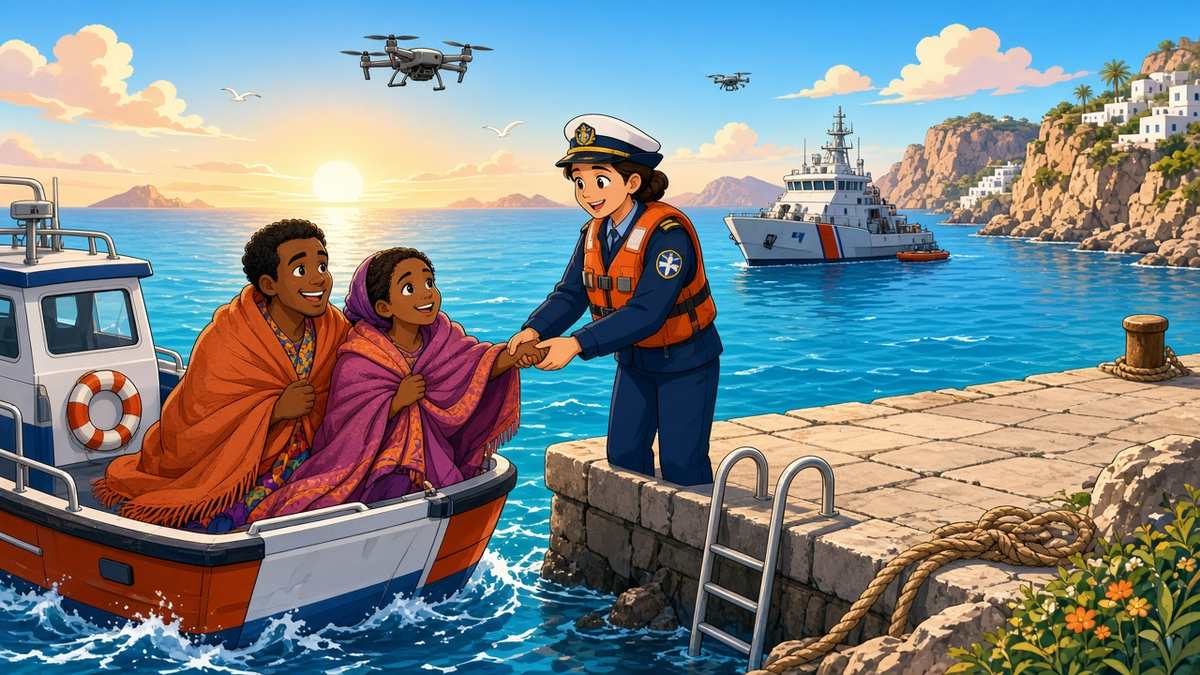
Two sea routes into Europe claimed at least 56 lives over the weekend, according to the International Organization for Migration. Announcing the toll on Monday, IOM chief Amy Pope said those who drowned were “people who left home hoping for a better life” and accused smuggling networks of making money out of desperation.
The Mediterranean losses came south of Crete. Before dawn on Monday, the crew of a Moroccan-registered cargo vessel raised the alarm over a struggling boat roughly 28 km out from Kali Limenes, a small village on the island’s southern shore. The Greek coastguard pulled 18 survivors from it and recovered 14 bodies; officials suspect the vessel had been drifting for days, unable to make land against strong winds. On Saturday evening another boat had yielded 28 Sudanese survivors and eight dead, with two people still unaccounted for. Both had set off from eastern Libya, and police arrested two Sudanese men whom fellow passengers named as the smugglers.
Frontex, the EU border agency, used a plane and a drone to find two more boats carrying roughly 90 people between them, all brought safely ashore. Crete has become a major gateway into the bloc this year, and the IOM warns that rescue capacity on the route from Libya has not kept up.
Yet the single worst disaster struck on Friday in the Atlantic, when a vessel capsized off Loumpoul on Senegal’s north-western coast, roughly halfway from the capital Dakar to Saint-Louis. At least 34 people died, a single survivor was found, and nobody yet knows how many more are missing.
The agency has logged at least 454 dead or missing on the Atlantic route towards the Canary Islands this year up to late October, a figure it calls a minimum because many boats vanish without trace. It is again urging governments to coordinate search and rescue and to open legal routes for migrants.
