
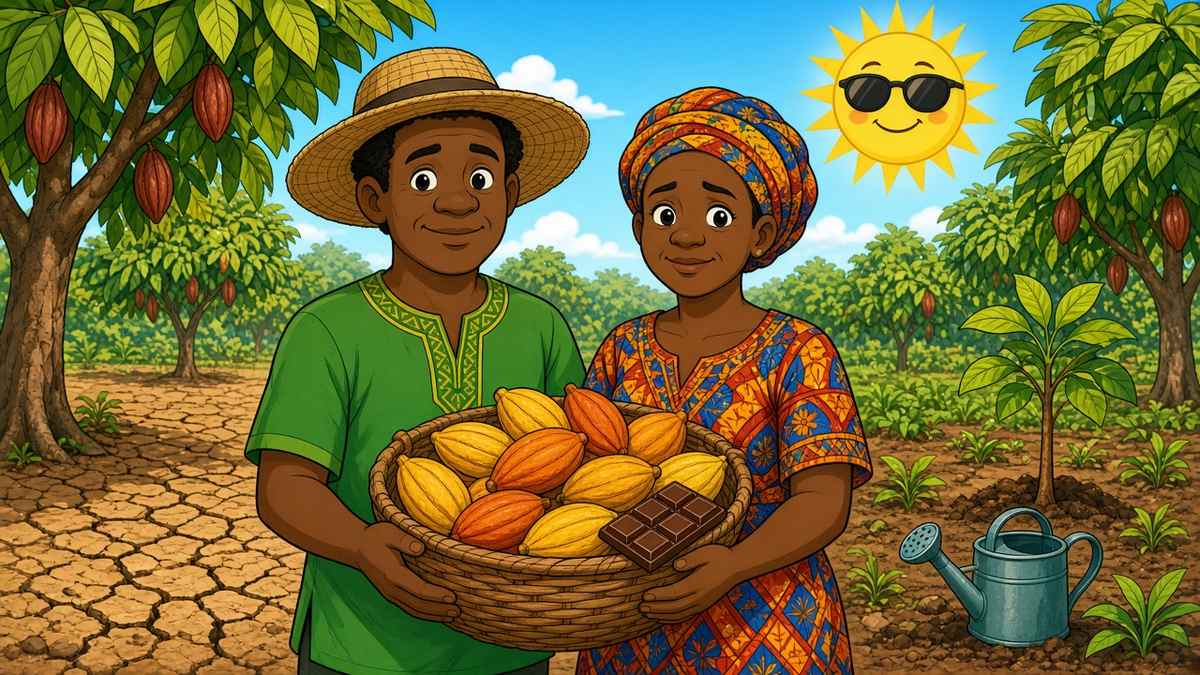
The country that grows roughly two in every five cocoa beans on the planet has been told to prepare for a lean couple of years. Ivory Coast’s state weather agency, Sodexam, warns that an unusually powerful El Niño could shrink national cocoa output by between 21 and 25 per cent, according to a note to the government reported by AFP.
The forecast is grim for the farm level. Sodexam expects rainfall to fall by 10 to 27 per cent, temperatures to climb and the dry season to drag on longer than normal. Under that kind of heat and water stress, cocoa trees shed their young pods before they ripen, flowers fail to set fruit and branches lose their leaves. The agency speaks of a potentially huge shortfall in income for growers and a drop in export revenue for the state.
Little in the Ivorian economy is untouched by cocoa. The crop accounts for around 15 per cent of gross domestic product and supports about five million people directly or indirectly. Together with neighbouring Ghana, the two countries supply between half and three-fifths of world output, so a bad season there tends to show up quickly in what chocolate makers pay.
El Niño is a recurring warming of the surface waters of the central and eastern equatorial Pacific that shifts wind and rain patterns around the globe every two to seven years. This year’s event has been labelled a “super El Niño”. It is expected to peak by December and may linger until April or May 2027.
Sodexam’s advice to farmers includes planting drought-tolerant varieties, adding backup irrigation and growing shade trees among the cocoa. The warning lands in an already overheated year: the EU’s Copernicus service says October 2026 was the warmest October ever recorded worldwide, about 1.75C above pre-industrial levels. Shoppers may feel the effects later, with prices typically lagging the harvest.
