
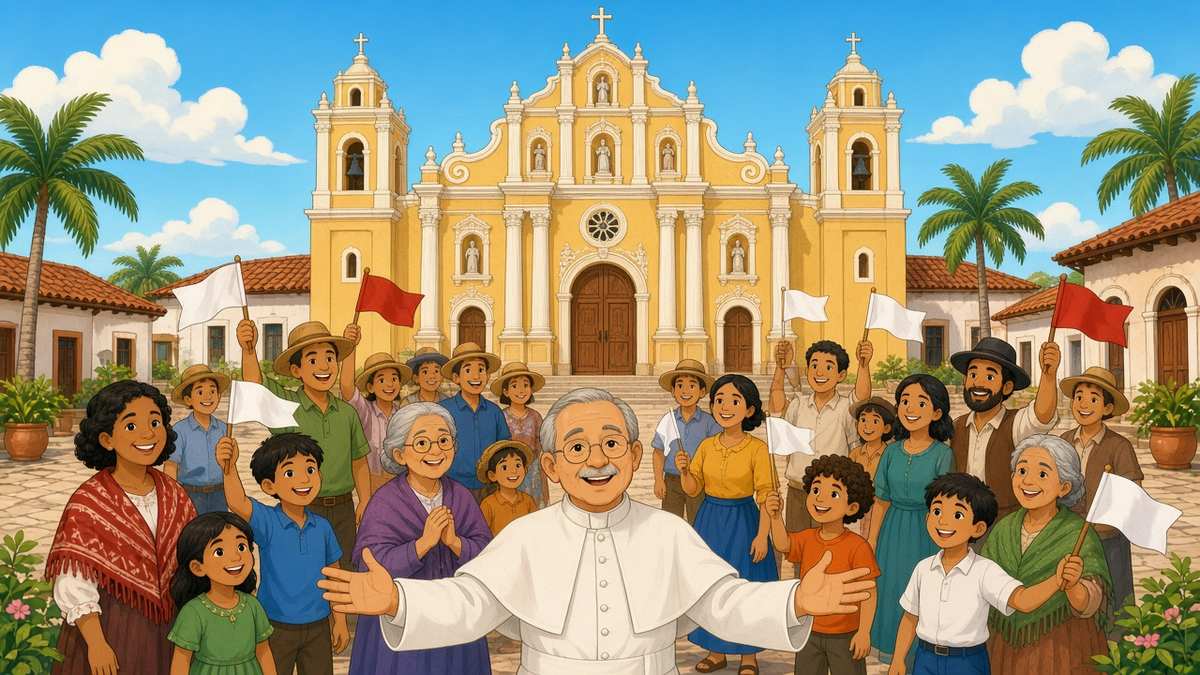
Few countries know this pope as well as Peru does. Before Robert Prevost became Leo XIV he spent decades there as an Augustinian missionary and later as bishop of Chiclayo, and on Thursday, his first full day back, he spoke to Peruvians less as a visiting head of state than as someone returning to familiar ground.
He walked from the archbishop’s residence to Lima’s cathedral for midday prayer with clergy, religious and lay leaders, holding up the 16th-century archbishop St. Toribio de Mogrovejo as a model of a shepherd who defended the poor. The country, Leo said, needed a Church “capable of building bridges where others raise walls”, a Church that hears people out, heals and forgives, yet owns up to its own failures. Repeating a theme of his papacy, he asked for a peace without weapons and urged Peruvians to resist camps and divisions.
Outside, in the square before the cathedral, four people described the pressures weighing on Peru: overstretched families, contempt for indigenous cultures, abuse of women, and the precarious lives of workers and small businesses. Leo’s reply was that economies and governments exist for people, not the other way round. He praised the women, from grandmothers to aunts, who frequently keep households going on their own, then urged the crowd to treasure women and to shield girls from harm. He also cautioned that screens were crowding out real conversation at home.
The pope arrived on Wednesday and was received at the Government Palace by President Keiko Fujimori. Peru is the final leg of a Latin American tour that began in Uruguay and Argentina. On Friday he heads north to his old diocese of Chiclayo for an open-air Mass, and the visit ends on 16 November.
