
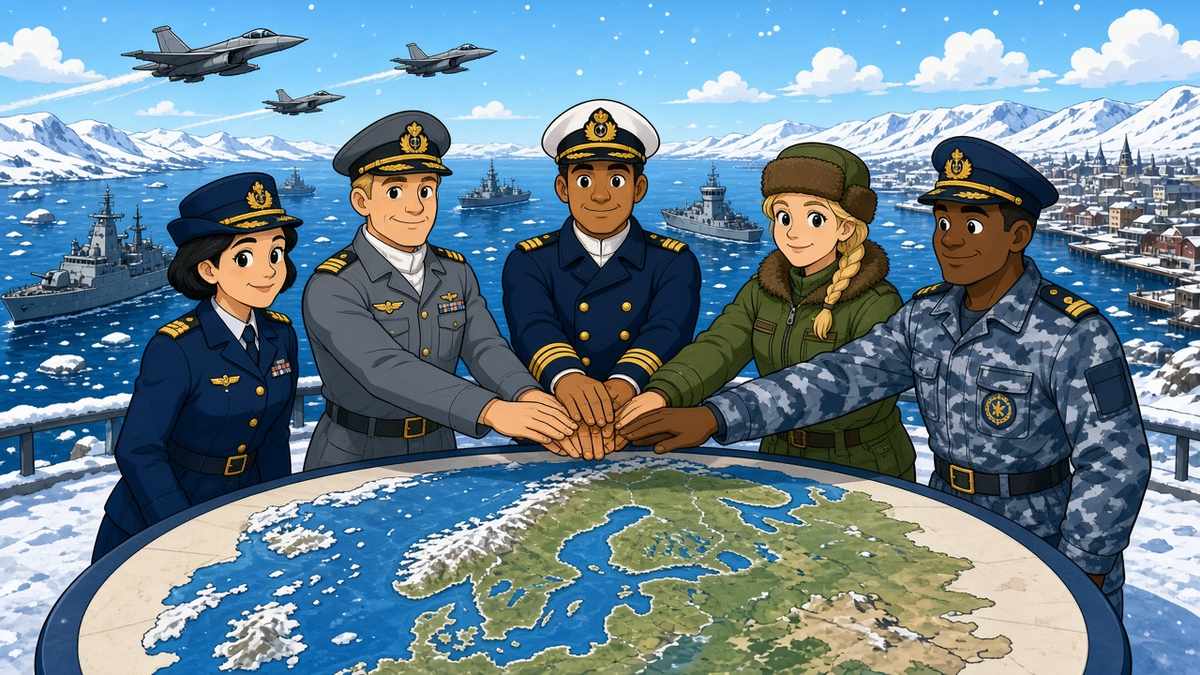
The Nordic countries have decided that working well together is no longer enough; they want a treaty that makes it easier. Meeting in Oslo this week, defence leaders of Norway, Sweden, Denmark, Finland and Iceland agreed on Thursday to begin work on a common Nordic defence treaty, a legal framework meant to smooth the way for their armed forces in peacetime, in a crisis and in war.
The idea grew out of feedback from the region’s military chiefs. Oslo’s host, Norwegian minister Tore O. Sandvik, says the troops already cooperate well on the ground, yet national rules still get in the way when soldiers, ships or aircraft move between countries. Removing those practical snags and aligning legislation will be the core of the negotiations. Sandvik said the goal was forces able to act together “even more effectively and seamlessly” across borders.
On paper the combined weight is considerable: by Sandvik’s count, the five can field some 250 modern fighter jets, almost 145 warships operating on the surface and around 100,000 troops when there is no war. No comparable deal has linked all five since Finland and then Sweden entered NATO, and the governments stress it is designed to strengthen the alliance, not to compete with it. Denmark’s Jeppe Bruus, who runs the defence ministry in Copenhagen, said it would show the Nordics “assuming even greater responsibility” for their own security.
Much of the groundwork is already in place. Since December 2025 all five have been grouped under one NATO command based in Norfolk, Virginia, new regional headquarters for land and air operations are being set up in Mikkeli, Finland, and Bodø, Norway, and a forward land force is based in Finnish Lapland. In their joint statement the ministers also said they were on course to triple Nordic ammunition output by 2030.
The NORDEFCO framework dates back to 2009 and rotates its chair every year. Norway hands that role to Sweden when 2027 begins, and Stockholm will steer the next phase of the talks.
