
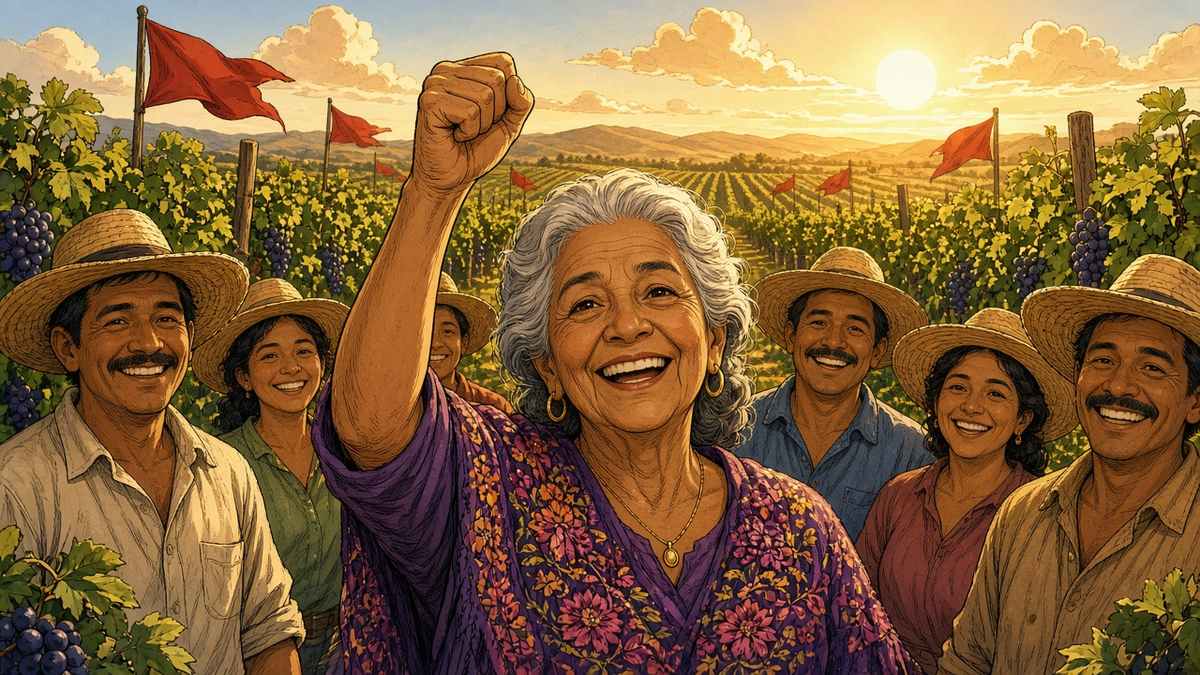
For more than seventy years Dolores Huerta argued, marched and bargained on behalf of the people who pick America’s fruit and vegetables. The labour organiser and civil rights pioneer passed away on Wednesday, aged 96, in her Bakersfield house. Relatives said cancer was the cause and requested privacy.
Huerta came to activism through a classroom. A New Mexico native from the mining town of Dawson, who came into the world as Dolores Clara Fernandez in 1930 and grew up in Stockton, she began her career as a teacher in the San Joaquin Valley, where children arrived at school hungry and without proper shoes. She decided she could help them more by organising their parents. In 1962 she and César Chávez launched the association that grew into the United Farm Workers.
What followed was decades on picket lines and at negotiating tables. Police took her into custody 22 times. Alongside Filipino vineyard crews she walked out during the long Delano grape dispute, and she sat across from growers to secure the earliest labour agreements and medical coverage the fields had ever seen. At a 1988 demonstration in San Francisco an officer’s club cracked several of her ribs and badly damaged her spleen. The slogan she coined, “Sí, se puede”, spread far beyond agriculture; handing her the country’s top civilian honour in 2012, Barack Obama quipped that he had lifted it for his own 2008 run.
She kept working well into her nineties, speaking about poverty, women’s and LGBTQ+ rights, immigration and voting, while raising eleven children over her lifetime. In 2026 she went public with an account of abuse by Chávez dating back to the 1960s, something she had kept to herself for roughly sixty years.
Tributes poured in quickly. The UFW credited her with making labourers and Latinos better organised and more powerful, while Bill Clinton mourned the loss of a close friend.
