
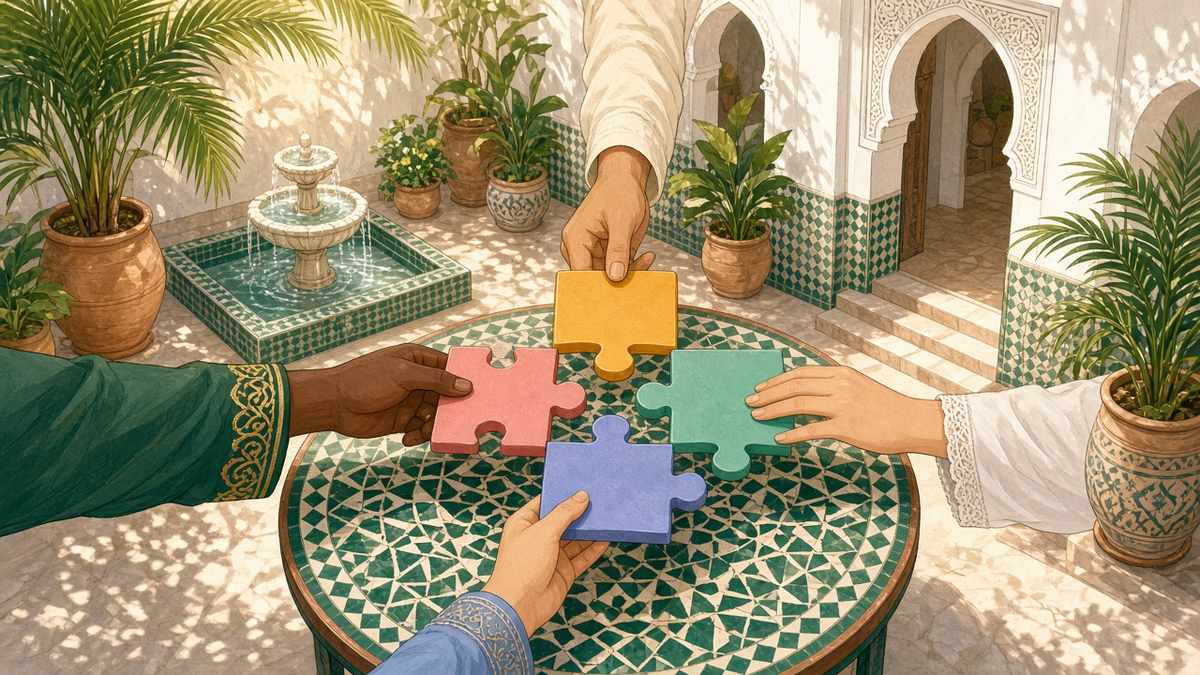
Morocco now knows the shape of its next government. On Monday in Rabat, Fatima Ezzahra El Mansouri, the first woman ever asked to lead a Moroccan cabinet, unveiled the alliance that will back her in parliament: her own centrist PAM (Party of Authenticity and Modernity), the nationalist Istiqlal, and two parties of the left, the USFP and the PPS.
The arithmetic is solid without being lavish. Between them the four can count on 207 votes in the 395-member lower chamber, a cushion of nine above the 198 needed to govern alone. The largest bloc by far belongs to PAM, last month’s election winner, with 97 members; Istiqlal adds 65, while the two left-wing partners bring 26 (USFP) and 19 (PPS).
The biggest story is the party left out. The RNI, the party of the outgoing prime minister, and ran a close second with 66 seats, will sit on the opposition benches. El Mansouri instead turned to the three members of the old Koutla bloc, a grouping with decades of shared history. The PPS was the last to commit, giving its approval only on Monday morning after its political bureau met.
In a joint statement the four parties pledged a “strong and cohesive” majority and said they would focus on fairness, on closing the gap between rich and poor regions, on civil liberties and on a stronger economy. Who gets which ministry has not been settled. The partners say nominees will be chosen for competence and integrity, and that a programme will follow quickly.
Deadlines are already pressing. The 2027 budget bill is due in parliament by October 20. The new team must also respond to frustration among young Moroccans over jobs, schools and hospitals, the grievances behind last year’s Gen Z protests, while overseeing the last stretch of a costly build-up to the 2030 football World Cup, a tournament Morocco shares with Spain and Portugal. Foreign policy and defence, however, remain firmly in the hands of King Mohammed VI, who named El Mansouri on September 29.
