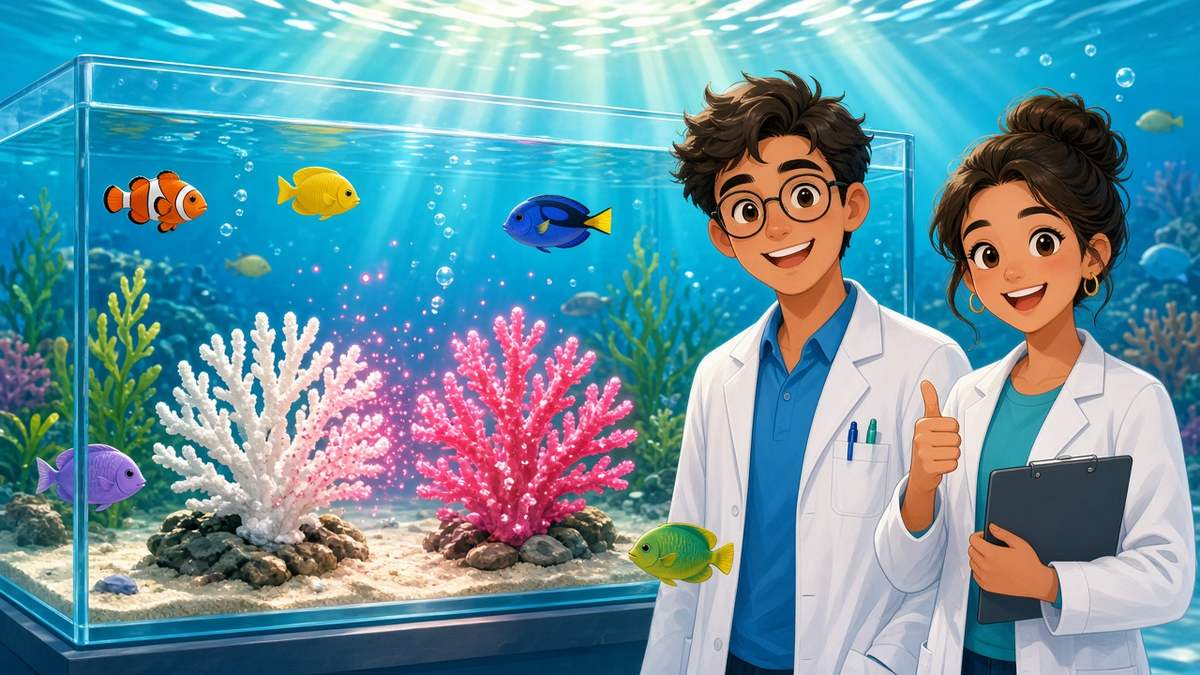
Sometimes science starts with an accident. In a Stanford laboratory tank, two fragments of the same coral colony toppled and came to rest against one another. The first fragment was in good shape, its partner pale and slowly starving. Where they touched, colour slowly crept back into the pale piece. Marine biologist Steve Palumbi noticed it, and his doctoral student Danny Collins turned the observation into an experiment.
The result, published on 14 October in the journal Science Advances, sounds almost too simple. Collins paired bleached and healthy fragments of the cauliflower coral Pocillopora damicornis taken from the same animal. Five pairs were allowed to touch; in the other five, the pieces sat just a few millimetres apart. Every bleached fragment that had contact regained full health within about seven weeks. Those without contact died.
Under the microscope, the team saw why. Genetically identical coral tissue recognises itself and fuses, forming tiny channels between the two fragments. Through these bridges the healthy partner passes on the symbiotic algae that corals depend on for food, along with nutrients. The first algae had crossed over after only three days. A single week of contact proved to be enough: after that, the healthy piece could be removed and the bleached one carried on recovering by itself.
That matters because bleaching is spreading as ocean heatwaves become more frequent. Heat stress makes corals throw out their algae, turning them white and leaving them weeks away from starvation. In the wild, recovery normally takes months or even years. Seven weeks would be a record.
The researchers stress that this was a lab study, not a ready-made rescue plan for whole reefs. Collins likes to point out that a bleached coral is in trouble but not beyond saving. The next step is to test whether the trick can work in the ocean.