
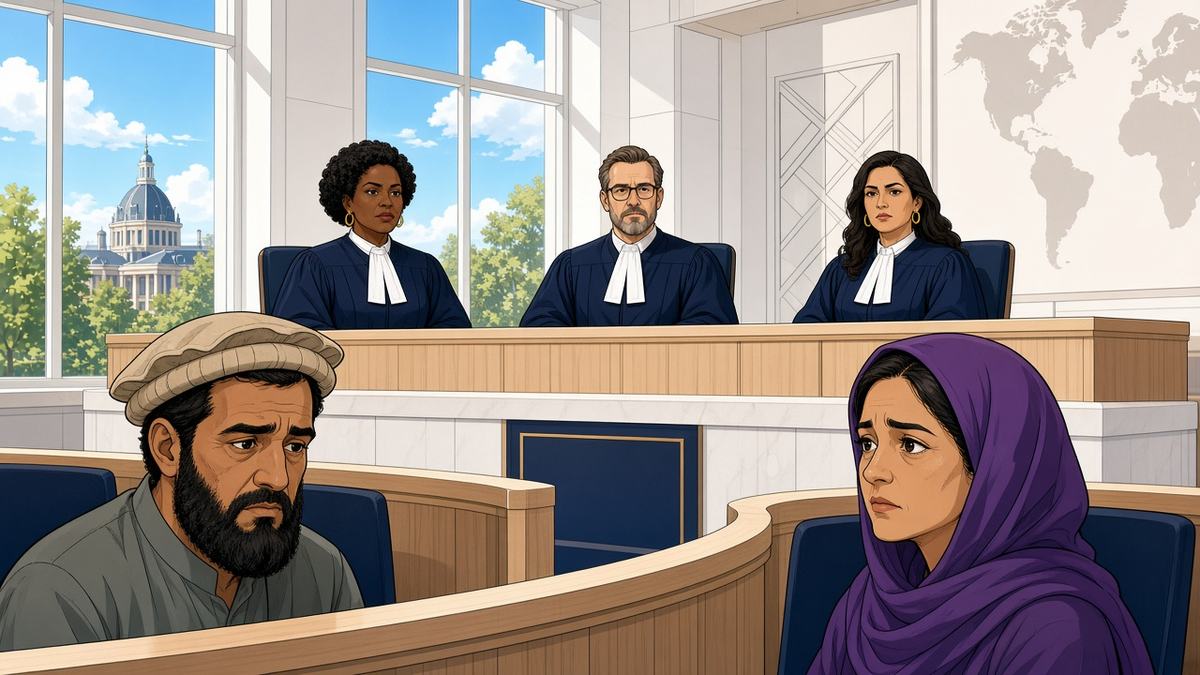
For more than five years, the chance that American troops and intelligence officers might one day answer to the International Criminal Court has shadowed ties between Washington and The Hague. That chance has now largely evaporated. The judges have ordered the original Afghanistan case formally wound up, leaving open only the strand that examines alleged wrongdoing by the Taliban since their return to power in 2021.
Handed down on Thursday and made public a day later, the decision rests on the chamber view that prosecutors had failed to demonstrate they could still investigate or secure evidence effectively in that portion of the file. Shutting it down ends the inquiry touching US personnel, dormant since 2021, and with it an inquiry into the regional Islamic State offshoot often labelled ISIS-K.
Prosecutors are not accepting the outcome and say they have already filed an appeal, offering no further particulars. The ruling follows an earlier instruction this year to divide the Afghanistan material into two distinct proceedings. Thanks to that division, the warrants the court issued last year for four senior Taliban figures stay in force.
Politically the step is delicate, even though the bench drew no connection. The United States, not a member of the court, has imposed penalties on several serving and former ICC staff over both the Afghanistan work and the warrants aimed at Israeli officials. In October, Secretary of State Marco Rubio pledged to keep chipping away at the institution for as long as he judged Americans to be at risk.
Whether the move calms that friction is doubtful. Nothing in it rewrites the founding rules, which let the court pursue anyone accused of the gravest crimes on the territory of a member state, and Afghanistan remains one. When the file was first opened six years ago, it reached as far back as 2002 and swept in conduct by Afghan government troops, by the Taliban and by American operatives. The former prosecutor, Karim Khan, had already sidelined the American strand in 2021, blaming the trouble of gathering proof.
