
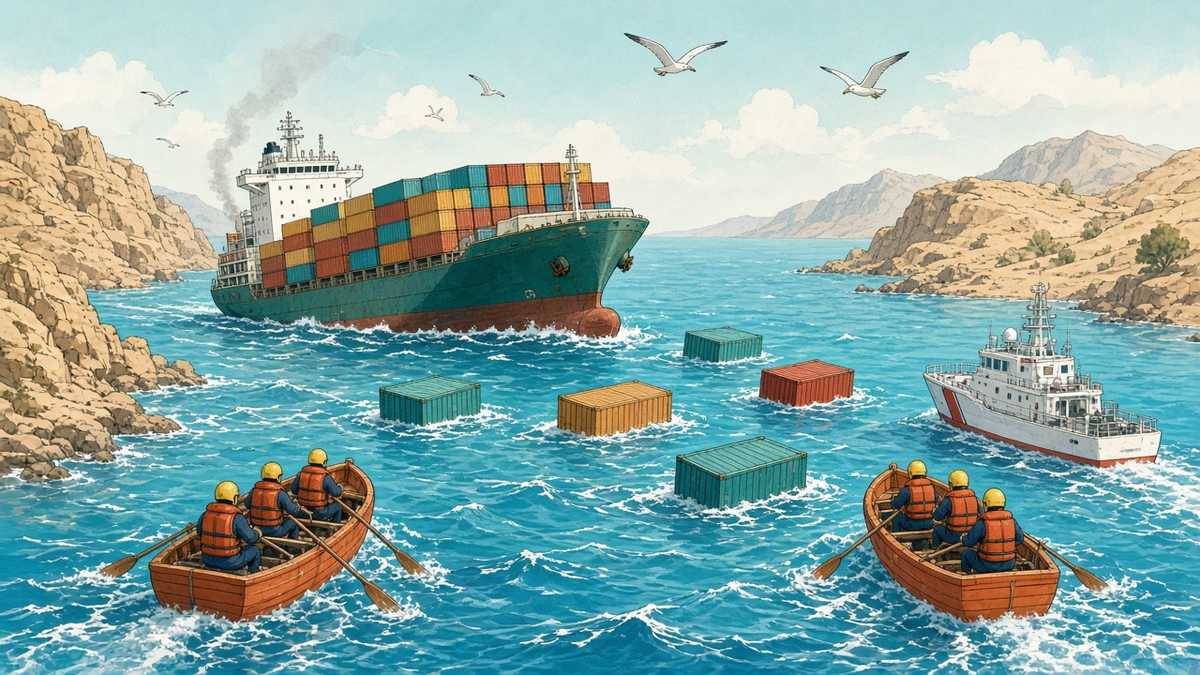
A Singapore-registered container vessel, the GFS Pride, now lies on the seabed off Oman after being hit by what Singapore’s port authority called an unidentified projectile. The blast set the ship ablaze, and it later went under. Luckily, everyone aboard, a crew of 21, got off unharmed.
The two sides tell very different stories. Tehran’s Revolutionary Guards claimed that a ship loaded with more than 2,500 boxes struck a naval mine after taking an “unauthorised” route, then exploded and sank. No one has independently confirmed that account. The risk consultancy Marisks reported seeing no evidence of a mine and described Tehran’s messaging as psychological pressure meant to scare carriers away. Singaporean officials called the attack unprovoked and illegal.
Pakistan’s hydrographic office warned sailors that the wreck lies roughly 4 nautical miles from the Musandam Peninsula, with containers drifting nearby. A sister vessel, the GFS Giselle, took a projectile to the hull around the same time but reached a safe anchorage with its crew unhurt. UN shipping agency figures make the Pride just the third commercial vessel lost since fighting with Iran erupted in February.
The sinking reflects a deliberate shift in Iranian tactics. After a tentative peace deal collapsed in the summer, Tehran began going after vessels that avoid its waters by using a southern lane through Omani territory. More than 20 ships, most of them tankers, have been attacked across the region this month alone.
Oil markets are feeling it. With US naval escorts, crude flows through Hormuz had climbed back close to normal in September, but Kpler data now shows them running nearly 40% below prewar levels. Each new wreck raises insurance costs and makes shipowners think twice about the world’s most important energy chokepoint.
