
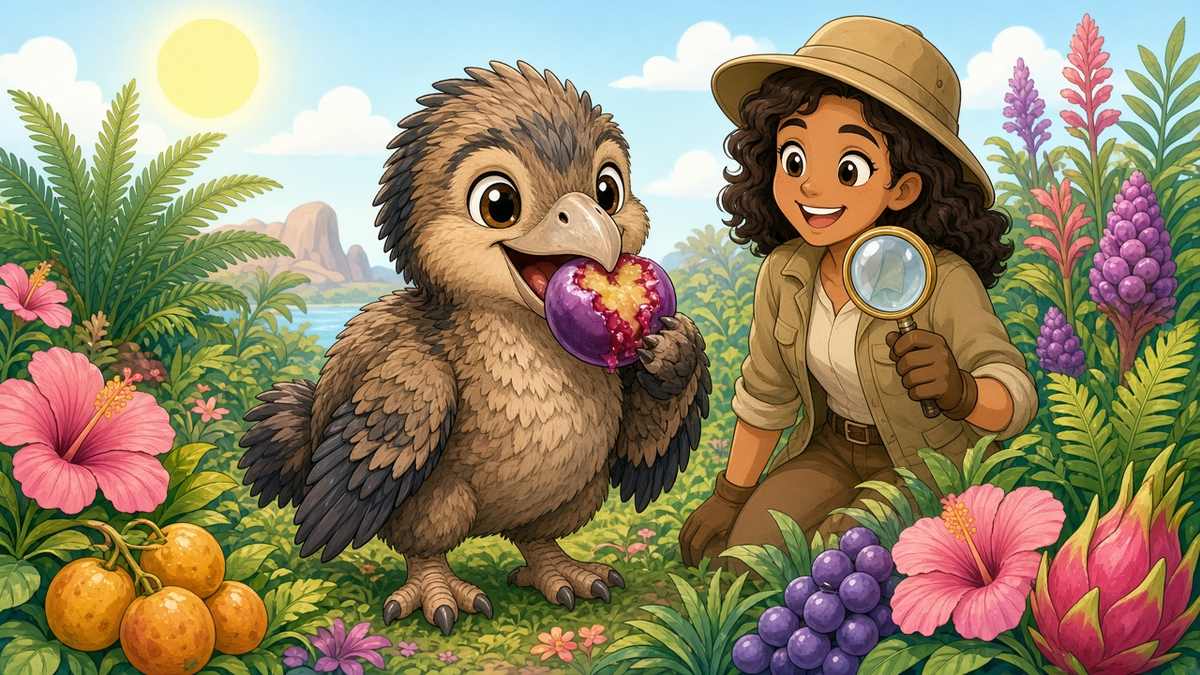
The Late Cretaceous is usually pictured as a world of giant meat-eaters and plodding plant-eaters. A small feathered animal from the American West suggests there was also room for a picky fruit lover. Writing in Nature Communications, palaeontologists led by Greg Funston of Stony Brook University have named Infernogallus jamesi, which they describe as the first dinosaur known to have specialised in eating fruit.
Its name translates roughly as “hell chicken”, a nod to the Hell Creek Formation where it was dug up and where it shared the landscape with T. rex and Triceratops in the closing few million years before the asteroid impact. A grown animal reached roughly turkey size and tipped the scales at about 12 kg. It had no teeth, only a beak, and belonged to the caenagnathids, a family of oviraptorosaurs whose ancestors sat on the carnivorous branch of the dinosaur tree.
What makes the find special is the skull. It is nearly complete and still articulated, the first ever recovered for this group. CT scans revealed that bones in the roof of the mouth bulged downward, which turned some of the jaw muscles so that they pulled forwards and backwards rather than up and down. That let the lower jaw slide to and fro, grinding soft food between ridges and grooves. The only living animals with a similar set-up are fruit-eating parrots.
The team thinks the dinosaur used this motion to strip the flesh from stone fruits while leaving the hard pit behind. “We never expected to discover fruit-eating dinosaurs,” Funston said. Co-author Thomas Dudgeon of the Royal Ontario Museum called its anatomy “bizarre among dinosaurs”. The study also finds that caenagnathids diversified at roughly the time flowering plants were producing larger and more varied fruits, a link palaeontologists had long struggled to demonstrate. Visitors in Toronto can now see the fossil, skull included, displayed at the ROM.
