
Japan, one of the most quake-exposed countries on Earth, now has a government body whose only job is disasters. The new disaster agency opened in Tokyo on Monday with a staff of more than 350, and its first act was to tell ordinary people that the state cannot save them on its own.
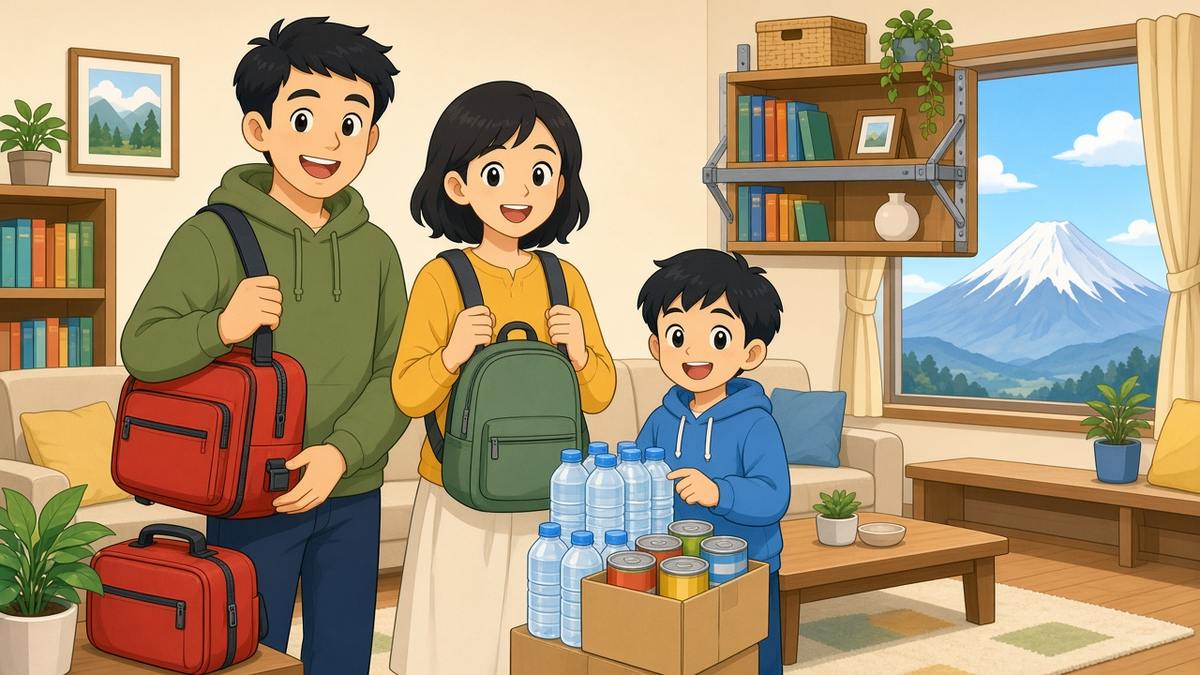
Goshi Hosono, the reconstruction minister who now doubles as disaster management minister, issued what the agency called an emergency request to the public: secure furniture to the walls, keep food and water in reserve, and find out where the nearest evacuation shelter is. Speaking to reporters, he was blunt that governments at every level can only do so much when a catastrophe hits, and that people must act for themselves. Government departments and town halls got similar homework, including a fresh look at how they would keep working through a crisis.
The scenarios behind the new agency are sobering. Planners have long warned of a megaquake in the Nankai Trough, a seabed fault south-west of the main island, of a strong tremor directly beneath greater Tokyo, and of a possible eruption of Mount Fuji. Any of these could leave huge numbers of people needing shelter at once, which is why better evacuation centres and fewer deaths in the aftermath are among its priorities.
Prime Minister Sanae Takaichi is formally in charge, and Hosono gains real leverage: he may advise other parts of government, and a department judged to be doing too little has to heed that advice. No new body had been attached straight to the cabinet since Japan’s digital authority opened its doors in 2021.
Beyond preparing for the next big one, it inherits ongoing recovery work on the Noto Peninsula, devastated in 2024, and in Kumamoto, shaken by a magnitude 7.1 quake in July, and it will treat increasingly severe flooding as a core concern. Small towns with thin budgets are a particular focus: regional hubs, with sites to be picked in summer 2027, are due to open by July 2028.
