
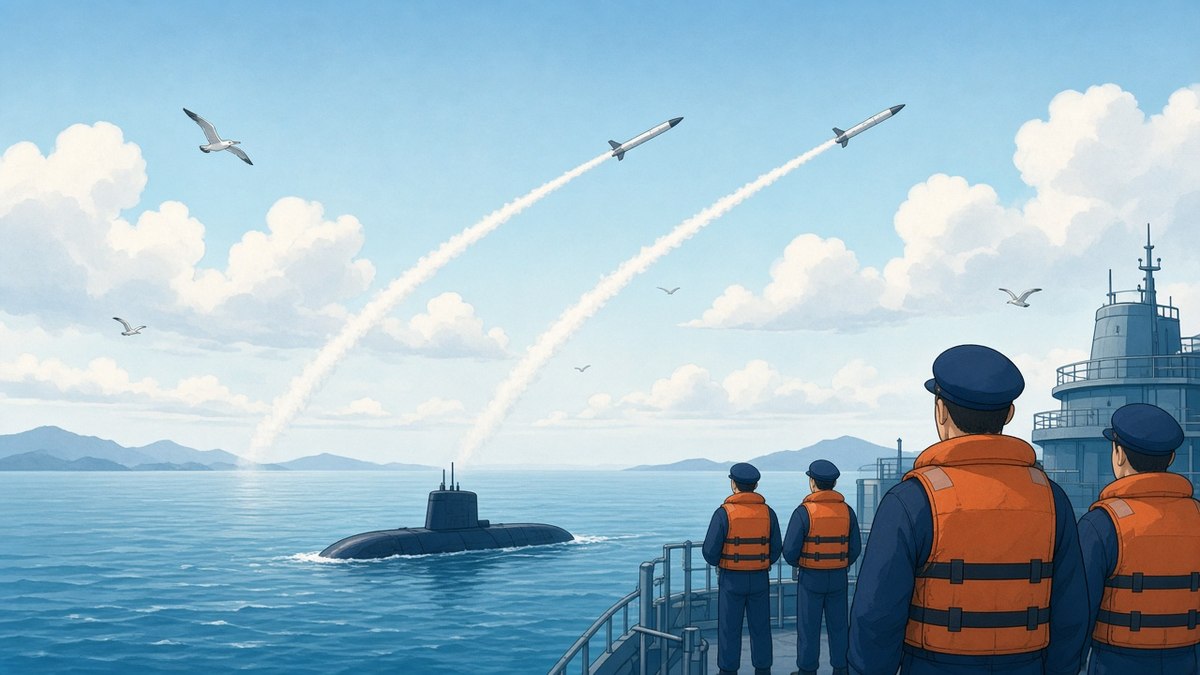
State outlet KCNA said on 15 October that Pyongyang’s Missile Administration had, a day earlier, launched a pair of distinct strategic cruise designs from beneath the East Sea. The declared aims were to check how ready underwater combat units are, train the navy for strategic tasks, and advertise the deterrent’s trustworthiness. KCNA insisted the shots posed no threat to nearby states.
South Korean officers later confirmed both weapons left a boat underwater — one rising from a vertical cell, the other exiting a torpedo tube. Briefing the press, Jang Do-young of the Joint Chiefs said sensors followed the flights from the moment of launch until they ended. He noted Seoul often stays silent even when such activity is detected.
KCNA placed senior figures Kim Jong Sik and Jang Chang Ha at the scene with navy engineers who specialise in underwater arms. One design carried the label Pulhwasal-3-31, matching a land-based cruise trial Pyongyang claimed days earlier. Ranges and the boat’s identity stayed secret; foreign analysts again named the still-limited “Hero Kim Kun Ok” as the likely platform.
The underwater salvo followed ballistic firings earlier in the week that Seoul tied to South Korea’s first public hypersonic glide-vehicle demonstration on 8 October, which President Lee Jae Myung attended. September mine blasts in the Demilitarized Zone that injured three South Korean soldiers have also darkened the mood.
Pyongyang’s preferred reading is a deterrent that can leave the sea as well as land pads. Outside governments still argue over whether a modern missile submarine is truly in service; proving another underwater launch after a nearly three-year gap sends a clear political signal either way.
