
Three days after a nationwide ground stop, America’s carriers were still untangling their timetables. FlightAware counted more than 2,300 cancellations and about 7,700 delays on Sunday, down from over 6,400 scrapped flights on Saturday. Transportation Secretary Sean Duffy said operations should be “fully normal” by Monday.
JetBlue was the worst hit, losing more than a quarter of its Sunday flights, with American Airlines not far behind in share terms. Delta, Southwest and United came off far lighter, scrapping only a small slice of their programmes.
A clearer picture of Friday’s breakdown is also emerging. According to the Federal Aviation Administration, its network was suddenly swamped with traffic, a flood the agency put at a thousand attempted connections within a few seconds. Ageing equipment became unstable, and radio and radar feeds faltered at 17 of the country’s 22 en-route control centres. Two locations are under scrutiny: a radio facility at El Dorado in Arkansas, where the contractor L3Harris had recently fitted fresh networking hardware, and a radar facility in Amarillo, Texas.
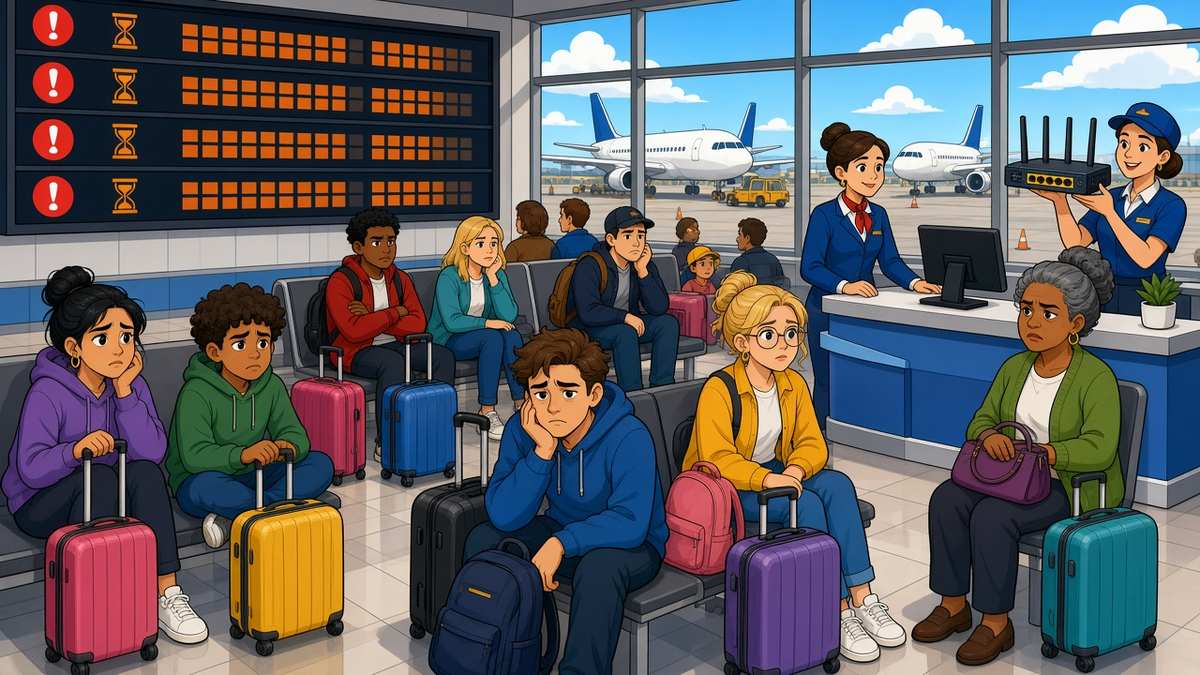
The FAA has switched off the broadcast function on those devices and on around 60 similar routers. One unit is being examined in a lab in Florida. According to the transport secretary, nothing points to hackers, and the technician who did the work, a military veteran, is not suspected of sabotage. The manufacturer’s parent company, Hewlett Packard Enterprise, insisted the hardware behaved exactly as the installer had set it up.
Friday’s halt lasted nearly five hours, the longest shutdown of US air traffic since the 9/11 attacks in 2001, though every aircraft already airborne landed safely. Duffy is using the episode to push for money: he said the routers dated from 2001, and he has raised his request for modernising air traffic control from 30 to 50 billion dollars.
