
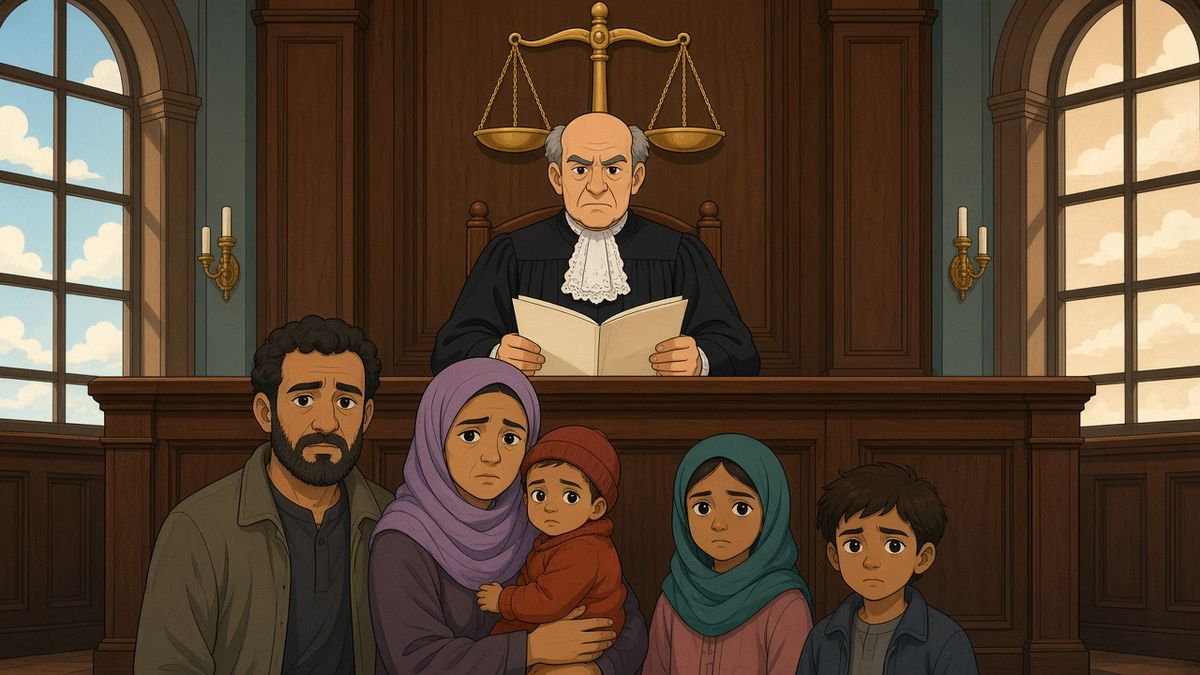
For the first time in its history, the International Court of Justice has declared a country guilty of genocide. On Thursday the UN’s highest court concluded that Myanmar intended to wipe out a large share of its Rohingya minority in the army’s 2017 campaign in northern Rakhine state.
The vote was nine to six. Reading the judgment over roughly three hours, court president Yuji Iwasawa said the bench was “fully convinced” that the army and other organs of the state had pursued that aim. The court also found that Myanmar failed in its separate duties to prevent the crime and to punish those who committed it.
The facts the bench accepted are grim. Around 10,000 Rohingya were killed, whole settlements were burned and flattened, women and girls were raped, and people were shot as they ran for the border. The killing of infants, the judges said, pointed to a deliberate effort to stop births within the group. Bangladesh took in the exodus: roughly 700,000 crossed over at the time, and its camps today shelter well over a million Rohingya.
Lawyers for Myanmar had portrayed the operation as a reply to raids by militants of the Arakan Rohingya Salvation Army. The court rejected that defence. It ordered reparations, including conditions for a safe and voluntary return, replacement of destroyed property and help in tracing the disappeared.
It was The Gambia, a small West African state, that launched the proceedings in 2019 in the name of the survivors. Far from The Hague, refugees gathered around public TV sets jumped up and applauded once the outcome was clear. “Today, we have finally been heard,” survivor Yousuf Ali said in The Hague.
Guterres, the UN chief, welcomed the decision as a “powerful recognition” of those who suffered. Britain expelled Myanmar’s defence attaché and asked for an urgent Security Council meeting, since only the council can enforce the court’s decisions.
Lawyers expect the judgment to echo well beyond Myanmar. By dismissing the claim of a legitimate counter-insurgency, the court set a marker that will be studied closely in other pending genocide cases, including the one brought against Israel over Gaza.
