
For thirteen months the Gaza ceasefire has been fragile, punctured by air strikes and gunfire, but Israeli armour had stayed on its own side of the map. That changed on Wednesday, when tanks pushed beyond the Yellow Line into central Gaza, and the military confirmed it was the first ground incursion of its kind since the US-brokered deal took effect in October 2025.
The push targeted districts near the Nuseirat and Bureij refugee camps. Residents described shelling, heavy blasts and armoured vehicles on Salah al-Din Road, the spine that links the north and south of the strip. Doctors said one person died in an air strike on al-Mughraqa, and two further deaths were reported hours before in separate strikes on Gaza City and Deir al-Balah.
Israeli officers framed the move as a strike against Hamas infrastructure and a threat to troops along the line. The army says the group has been rebuilding its ranks and its arsenal, and it insists it remains free to act anywhere in Gaza when danger is imminent. Hamas called the raid a “flagrant violation” and blamed both Israel and Washington for the consequences.
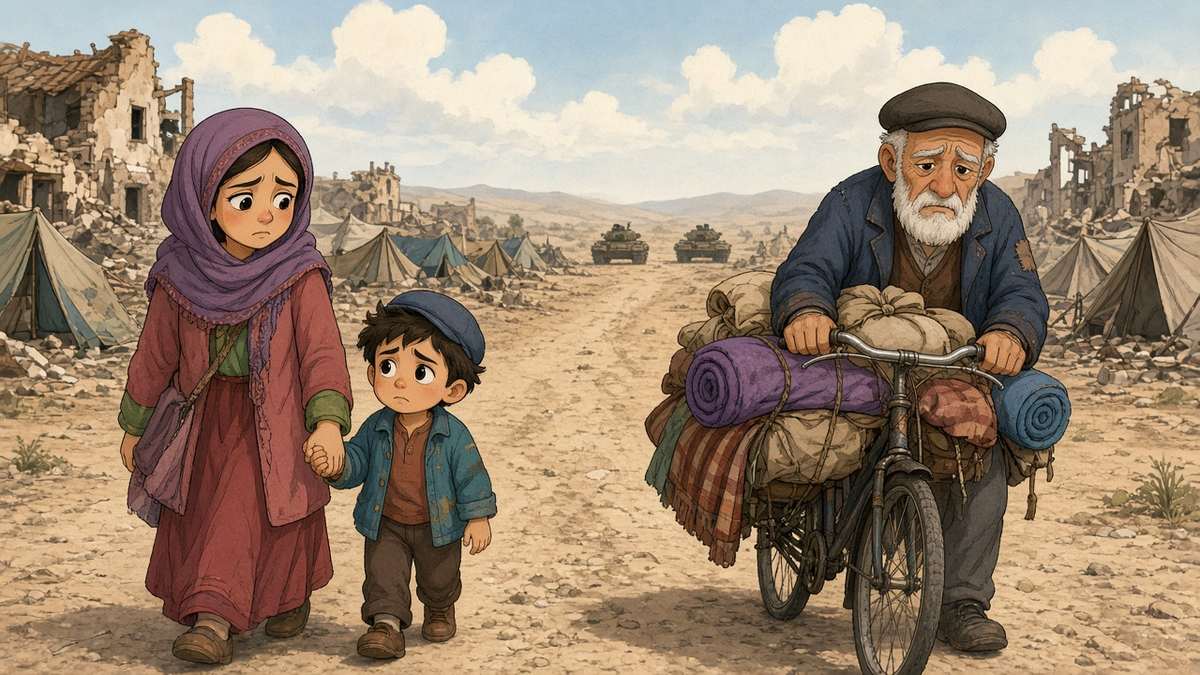
On the ground, the scenes were painfully familiar. Families stacked mattresses and water cans on bicycles, wheelchairs and motorbikes and headed west. One woman, Salam Aql, said they had hoped to stay put because they were worn out by repeated displacement; they left only after a boy in their group was shot in the leg.
The truce has never meant an end to the killing. Gaza’s health authorities put the Palestinian death toll since it began at no fewer than 1,600, and Israel says five of its soldiers have died in the same period. Whether the agreement can absorb a renewed ground campaign is now the central question.
