
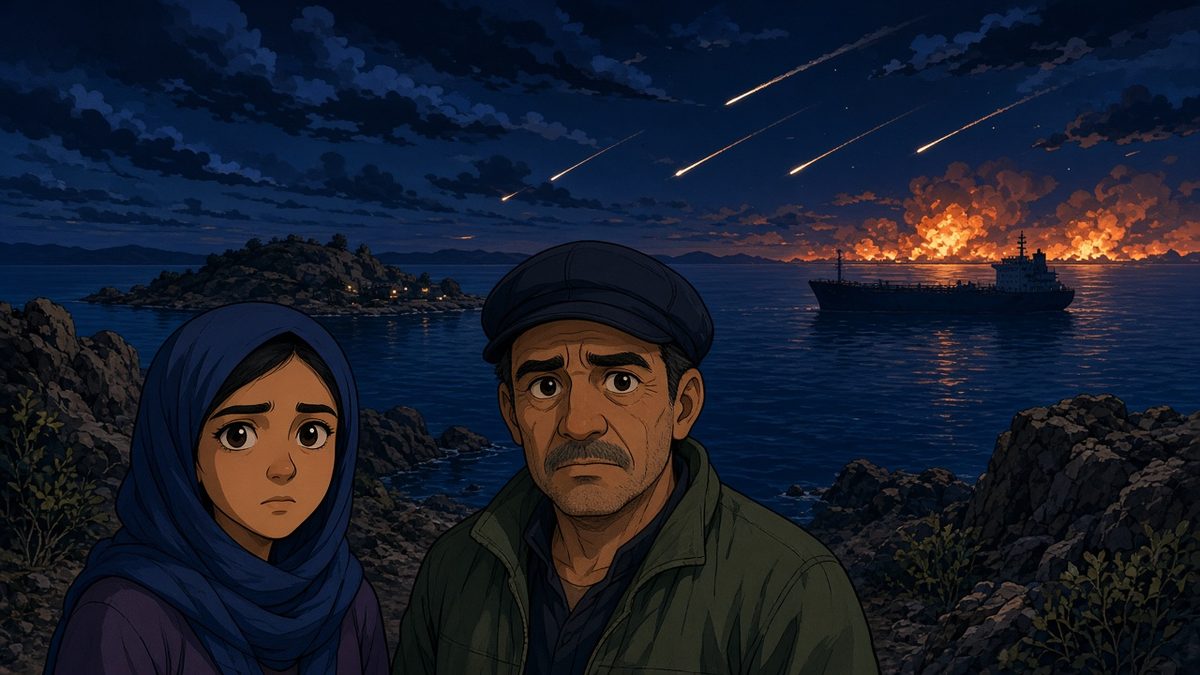
A fragile calm in the Gulf has broken down. American warplanes bombed a Revolutionary Guards launch pad for missiles on the Iranian island of Qeshm, out in the Hormuz strait, and Tehran answered with drones sent toward Kuwait and Bahrain, raising fears that the nine-month war could widen again.
Washington framed its raid as retaliation. Earlier, Iranian drones had flown at a US-operated radar at Bahrain’s Sheikh Isa air base; Central Command said they were downed and caused no harm. The Guards claimed they were answering incursions into Iranian airspace by American drones. Iran’s state news agency IRNA counted five or six blasts on Qeshm, while a provincial official insisted no homes, shops or infrastructure were damaged.
Then came the retaliation on another front. Tehran’s armed forces said their drones had been aimed at air-defence systems and firing positions at a Kuwaiti installation where US personnel are based. Kuwaiti air defences said they intercepted the threat, with nobody hurt, but it was the first attack on the country in more than two months, and its foreign ministry denounced what it called a serious violation of international law. Bahrain, which hosts America’s Fifth Fleet, has now counted four such strikes within a week. In a separate incident out at sea, a tanker run by the Emirati state oil firm was hit, leaving one crew member unaccounted for.
Qatar, which has been brokering indirect talks between the two sides, warned that the flare-up threatens efforts to contain the conflict. Iran’s army chief, Major General Amir Hatami, promised a heavier response to any repeat. Fighting first erupted in late February, when the United States and Israel bombed Iran. Because about 20 percent of the world’s oil and gas usually passes through Hormuz, traders are following every move with unease.
